







Above all, a Beijing hutong itinerary works best when it is built around a single clear purpose. The hutong districts are large enough that trying to see everything in one day produces a blur of grey walls and souvenir shops. Instead, pick a single character — art and contemporary culture, or imperial history and architecture — and follow it from morning to evening. These two routes do exactly that.
Quick Summary
Two distinct day routes: the Art Route covers Nanluoguxiang side alleys → Fangjia Hutong → Wudaoying → Gulou (8–9 hours, ~4km). The Imperial History Route covers Yonghegong → Guozijian Street → Maoer Hutong → Shichahai → Prince Gong’s Mansion (8–9 hours, ~5km). Both use Beijing subway and work best on weekdays. Do not attempt both in one day.
Both routes are designed for a single full day. Both use public transport, and neither repeats the other’s stops. If you want to understand what you’re walking through before you go, the guide to Beijing hutong culture covers the architecture, etiquette, and social history that make these lanes worth the time. Choose the one that matches how you think, and the hutongs will feel coherent rather than random.
Route 1: The Art and Culture Beijing Hutong Itinerary
This beijing hutong itinerary suits travellers who want creative energy, independent shops, street art, and the living culture of a neighbourhood that has reinvented itself without losing its bones. In total, the walking distance is approximately 4 kilometres. Allow 8–9 hours including stops.
Morning: Nanluoguxiang Side Alleys (9:00–11:00)
Getting there: Nanluoguxiang station, Beijing Subway Line 6, Exit A[1]. You emerge directly onto the main street.
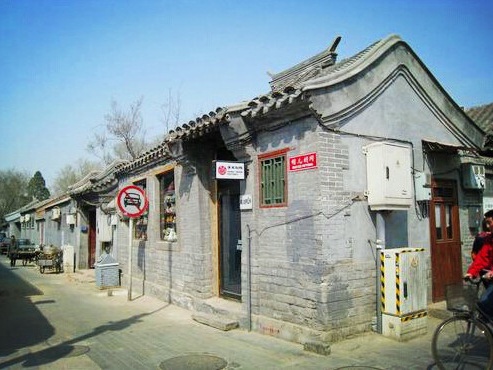
Start before the crowds. Indeed, at 9am on a weekday, Nanluoguxiang’s main street is quiet enough to walk at a genuine pace. However, the main street is not your destination. Turn immediately into one of the side alleys — Banchang Hutong or Juer Hutong on the east side work well. Notably, these alleys preserve the Yuan-dynasty residential grid in its most intact form: wide enough for two bicycles, lined with grey brick walls and heavy wooden gates, with the occasional courtyard visible through a gap.
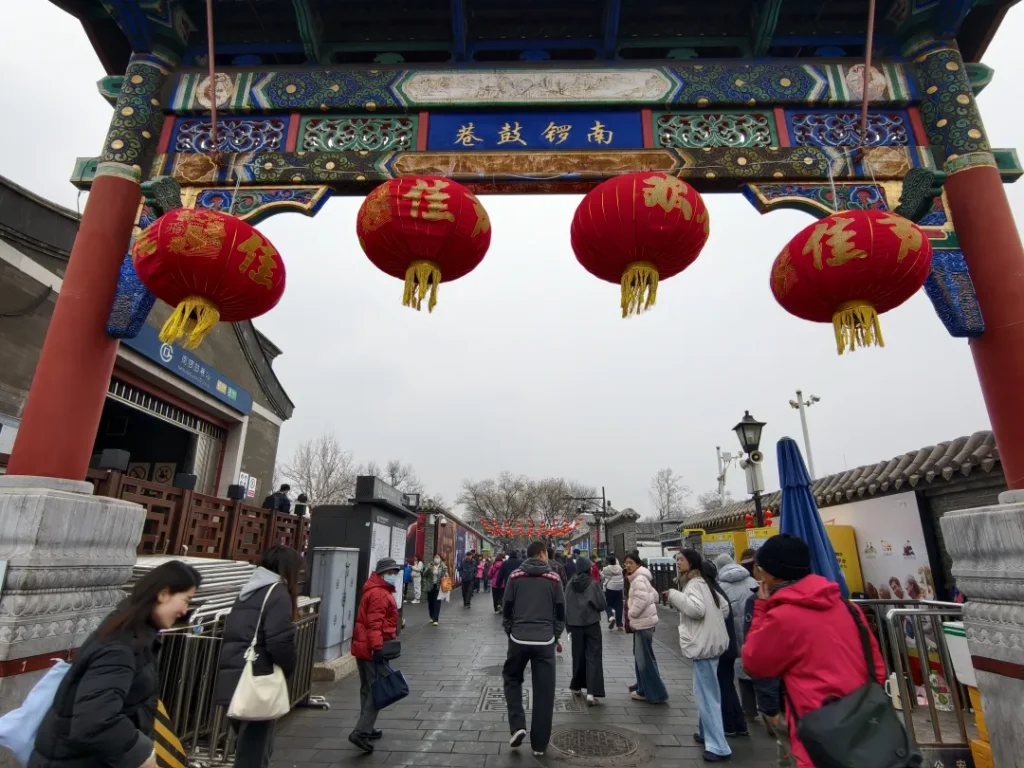
Walk north through the side alleys to the quieter sections above Di’anmen Outer Street. Here, the gates still carry drum-stone door piers — the cylindrical ones indicating former military households, the square-based ones marking civil officials. You are, in effect, reading a 300-year-old neighbourhood register. Therefore, allow 90 minutes for the side alleys. Then return briefly to the main street for a coffee at one of the independent cafes that have taken over former courtyard residences.
Late Morning: Fangjia Hutong Arts District (11:00–13:00)
Getting there: 10-minute walk north from Nanluoguxiang along Andingmen Inner Street, then left into Fangjia Hutong.
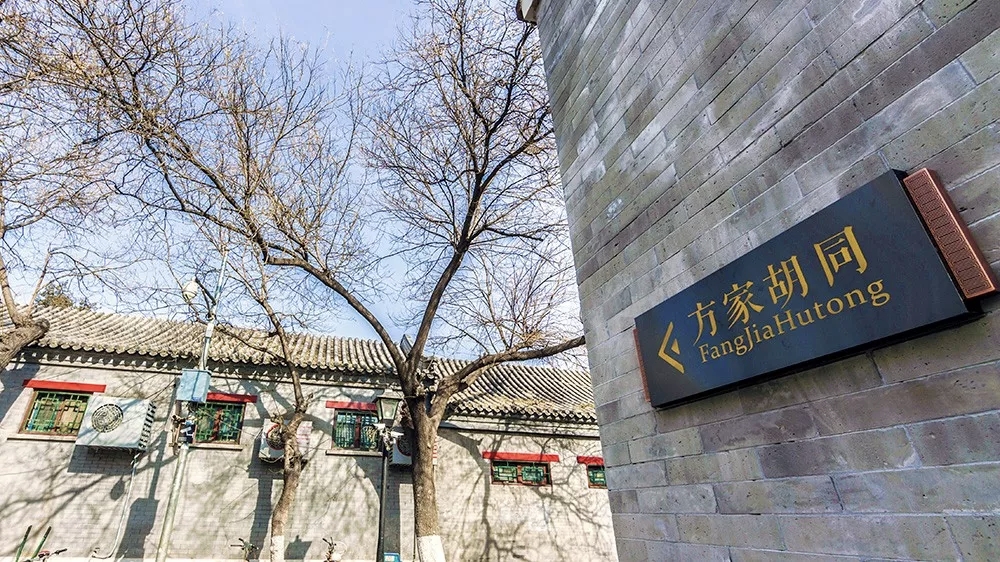
Fangjia Hutong was a Qing-dynasty government office compound. Today, however, the converted factory space at No. 46 houses a theatre, gallery spaces, and rotating cultural pop-up shops. Furthermore, the surrounding courtyard buildings have become design studios and boutique cafes, with exposed brick walls and potted ferns in the alleys outside.
Indeed, this is the best hutong in Beijing for contemporary art in a residential setting. Indeed, unlike the gallery districts of 798 or Caochangdi, Fangjia’s art exists alongside working neighbourhood life — a grandmother shelling beans in a courtyard twenty metres from a design exhibition. Moreover, the area connects into quieter residential hutongs to the north and east that most visitors never reach.
Lunch at Fangjia: Look for home-cooking restaurants (家常菜) on the western end of the hutong — for the full guide on how locals eat in the hutongs, including what to order and how to find the best spots, see our local experience guide. — handwritten menus and elderly regulars are quality indicators. Recommended dishes: stir-fried pork with garlic shoots (蒜苔炒肉), cold sesame noodles (芝麻凉面), or egg and tomato over rice (西红柿炒蛋盖饭).
Afternoon: Wudaoying Hutong (14:00–17:00)
Getting there: 15-minute walk east from Fangjia Hutong, or take the subway from Beixinqiao (Line 5) one stop to Yonghegong (Lines 2 and 5).
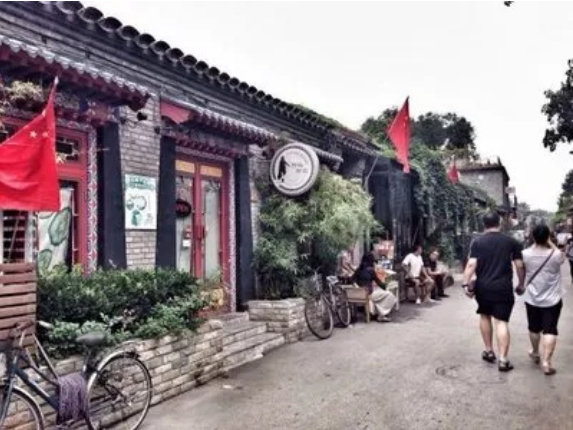
Wudaoying Hutong runs east from the Yonghegong Lama Temple entrance. First, walk it west to east to get your bearings, then double back to the shops that caught your eye. Meanwhile, the independent design shops here — leather workshops, botanical print studios, enamel pin sellers — are the best concentration of genuinely handmade goods in Beijing’s hutong districts.
At No. 46, Jing-A Taproom is one of Beijing’s original craft beer bars, open from midday onward. Before leaving Wudaoying, moreover, walk to the western end and turn into the lanes toward Yonghegong. A late-Qing St Michael’s Church sits behind a courtyard wall so inconspicuous that most visitors walk past without noticing it. It is consequently almost always quiet — therefore worth a brief visit.
Evening: Gulou Area and Drum Tower (17:00–20:00)
Getting there: 20-minute walk west from Wudaoying, or take Line 5 from Yonghegong to Beixinqiao and walk 12 minutes north.
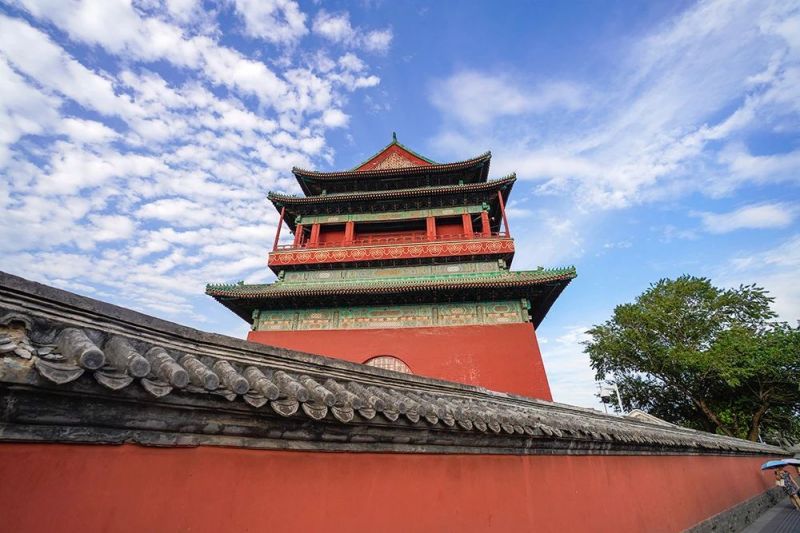
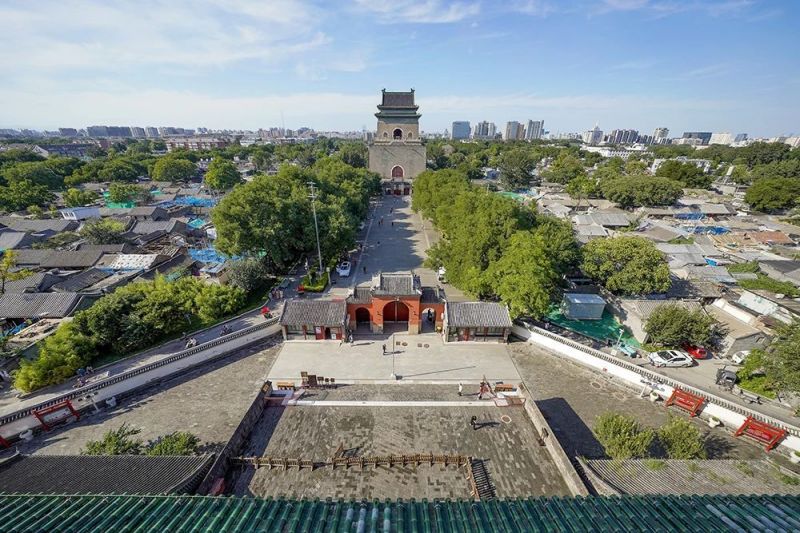
The Drum Tower (鼓楼) closes at 5:30pm, so arrive by 5pm at the latest. Consequently, climb it for a view over the hutong rooftops — the best available perspective on how the grid system looks from above, with grey tile roofs stretching in all directions. After the tower, moreover, the lanes immediately east and west of Gulou Dong Dajie are excellent for an early evening walk. Dinner: Look for jiachangcai (家常菜) signs around Mao’er Hutong and order braised pork belly (红烧肉) or dry-fried green beans (干煸四季豆).
Route 2: The Imperial History Beijing Hutong Itinerary
This beijing hutong itinerary suits travellers who want to understand what these lanes were, who lived in them, and why the architecture looks the way it does. In total, the walking distance is approximately 5 kilometres. Allow 8–9 hours including heritage site visits.
Morning: Yonghegong and Guozijian Street (9:00–12:00)
Getting there: Yonghegong station, Lines 2 and 5, Exit C. The Lama Temple entrance is immediately outside.
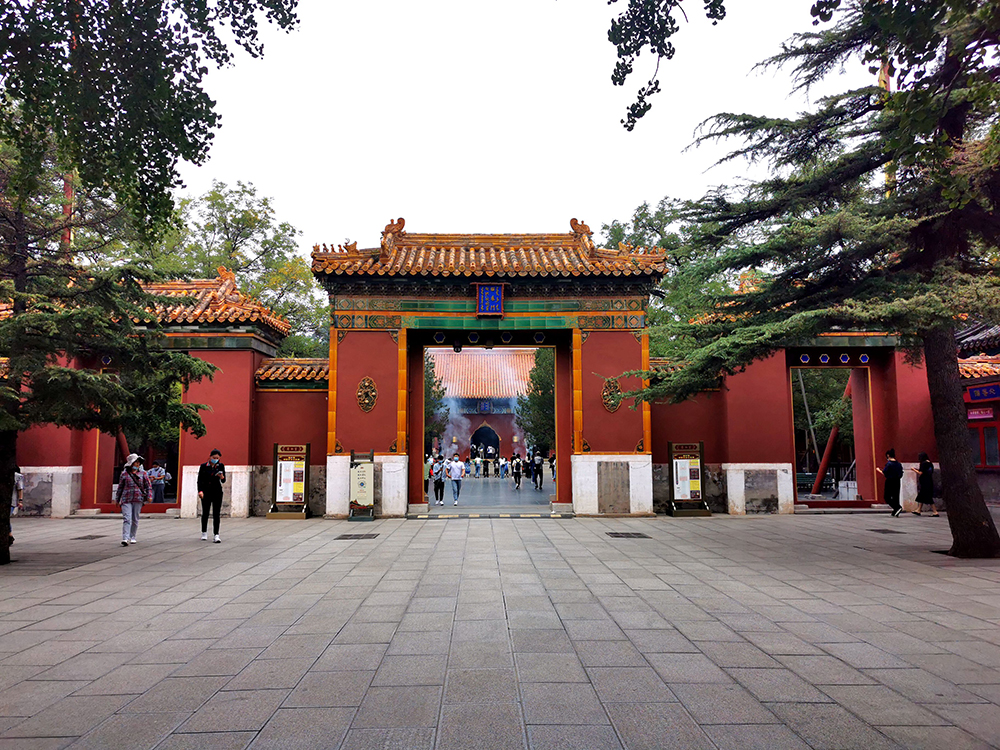
Begin at Yonghegong Lama Temple (雍和宫). It is not a hutong; nevertheless, it establishes the Qing-dynasty context that makes everything else legible. The main halls follow the same hierarchical north-south axis as a siheyuan courtyard house, scaled to imperial proportions. Allow 45 minutes. Then, walk five minutes west to Guozijian Street.
Guozijian Street is Beijing’s only surviving hutong named for an imperial institution — the National Academy that trained China’s civil service for six centuries. As a result, four stone pailou gateways still mark both ends. Moreover, the double row of scholar trees (槐树) lining the street provides, in late April, the finest urban blossom walk in Beijing.
Therefore, spend at least 90 minutes at the Confucius Temple (孔庙) and Imperial Academy Museum (国子监博物館)[2]. In the Confucius Temple courtyard, 198 stone steles record the names of 51,624 successful examination candidates — the most complete archive of China’s meritocratic bureaucracy anywhere in the world. The Imperial Academy’s painted ceiling and marble balustrades, furthermore, give a sense of institutional prestige that no photograph fully communicates.
Midday: Maoer Hutong (12:00–14:00)
Getting there: 15-minute walk south from Guozijian Street, then right into Maoer Hutong.
Lunch first: Stop at one of the small restaurants on Andingmen Inner Street before entering Maoer Hutong. The food that Beijing hutong residents actually order — zhajiang mian, guotie, and the etiquette of eating at street pace — is covered in full in our local experience guide. Order guotie (锅贴, pan-fried dumplings) or wonton soup (馄饨). Indeed, eating at street pace — standing or on a low stool — is correct for this kind of lunch.
Maoer Hutong is, architecturally, one of the best-preserved Qing-era residential lanes in Beijing’s inner city. Walk its full length east to west. First, at No. 35, look for the gate that was the childhood home of Empress Wanrong — the last Empress of China — before her selection in 1922. At No. 45, a few doors further along, stands the courtyard from which her wedding procession departed on 1 December 1922.
As you walk, read the gates. The drum-stone door piers identify household rank. Additionally, carved lintels carry bat (luck), fish (abundance), and pomegranate (fertility) motifs. Taken together, Maoer Hutong is therefore an outdoor museum of Qing residential architecture that costs nothing to enter.
Afternoon: Shichahai Lakes and Yandai Xiejie (14:00–17:30)
Getting there: 10-minute walk west from the end of Maoer Hutong to the Silver Ingot Bridge (银锭桥) between Qianhai and Houhai lakes.

Walk the north bank of Houhai from east to west. Indeed, on a weekday afternoon, locals set up chess boards along the water and elderly residents walk with their birds. Furthermore, at the western end of Houhai, turn south into Yandai Xiejie (烟袋斜街) — Tobacco Pipe Street. This is one of Beijing’s oldest surviving commercial lanes, dating to the Ming dynasty. It takes ten minutes to walk end to end and thirty to walk it properly.
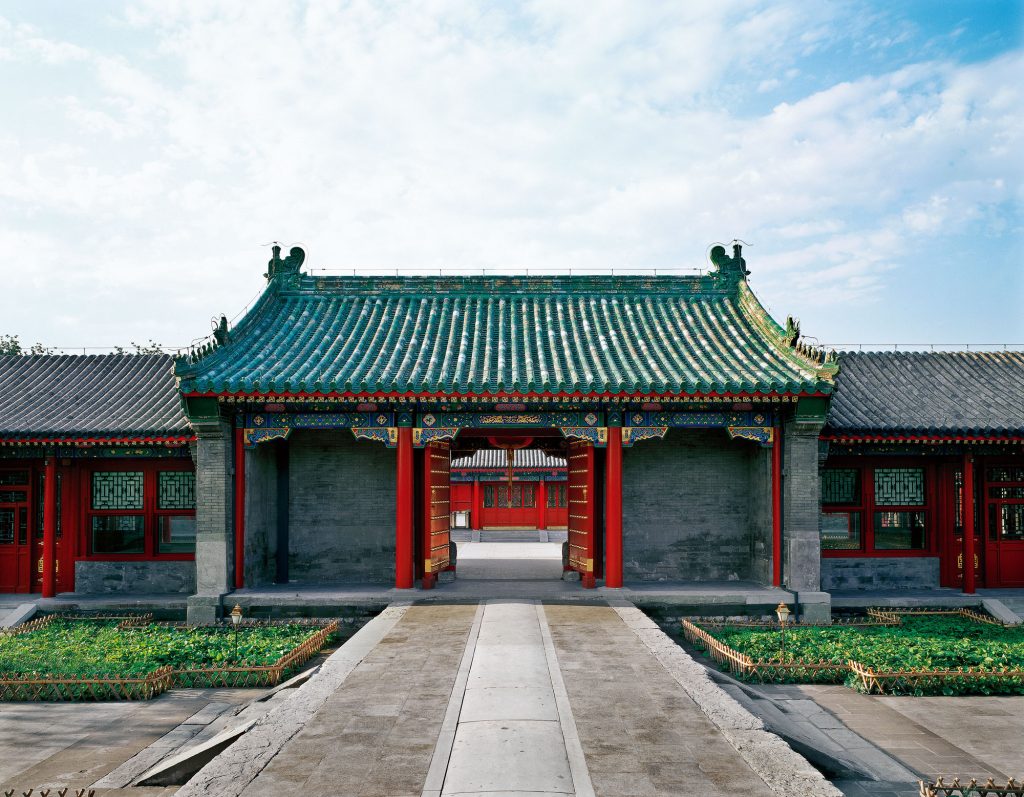
From Yandai Xiejie, finally, walk five minutes to Prince Gong’s Mansion (恭王府)[3]. Indeed, it is the largest surviving Qing private residence in Beijing, with eleven courtyards and a garden containing a full-scale Suzhou rockery. Book in advance via WeChat. Allow 75 minutes. The mansion makes concrete everything that the Maoer Hutong gates only implied: this is what Qing aristocratic domestic life looked like at its most elaborate scale.
Evening: Houhai Lakeside (17:30–20:00)
After Prince Gong’s Mansion, therefore, return to the north bank of Houhai for the evening. The light at this hour turns the willows gold and the water silver. Instead, choose one of the quieter establishments on the north bank (Beiyan) that face the water — avoid the main bar street on the south bank (Nanyan), which is tourist-oriented. Dinner: Siji Minfu (四季民福) near Nanluoguxiang serves properly lacquered Peking duck without a two-hour wait. Alternatively, kaoya juan (烤鸭卷) duck rolls from smaller hutong restaurants near Houhai are a lighter, faster version of the same tradition.
Practical Information for Both Routes
Both routes work best on weekdays. Weekend mornings, however, bring significantly more visitors to Nanluoguxiang, Wudaoying, and the Shichahai area. The heritage sites — Confucius Temple, Guozijian, Prince Gong’s Mansion — are equally manageable on weekends if you arrive at opening time.
Comfortable walking shoes are essential. Indeed, both routes cover 4–5 kilometres on uneven flagstone surfaces. Furthermore, a light day bag is useful for purchases on the Art Route. Similarly, the best season for both routes is late April to early May or mid-October. For full seasonal guidance, see our seasonal guide to Beijing hutong visits.
For the cultural background that makes these walks more meaningful, see our complete guide to Beijing hutong culture. For the history behind the buildings you will see, read our history of Beijing’s hutongs. For a neighbourhood-by-neighbourhood overview, see our guide to the best hutongs in Beijing.
Frequently Asked Questions
What is the best Beijing hutong itinerary for one day?
The best single-day Beijing hutong itinerary depends on your interests. For creative culture, the Art Route covers Nanluoguxiang side alleys, Fangjia Hutong, Wudaoying, and the Gulou area. If history is your focus, the Imperial History Route covers Yonghegong, Guozijian Street, Maoer Hutong, Shichahai, and Prince Gong’s Mansion. Both routes take 8–9 hours and are designed to be walked in full.
How do I get around Beijing hutongs by public transport?
All major hutong areas are accessible by subway. Line 6 serves Nanluoguxiang directly. Lines 2 and 5 serve Yonghegong, which is the starting point for Wudaoying and Guozijian Street. Beihai North (Line 6) is the closest station to Shichahai. Between stops, walking is therefore faster and more interesting than any other transport option.
How long does a hutong day trip in Beijing take?
A well-planned hutong day trip takes 8–9 hours including meals and heritage sites. The main areas can be walked in 3–4 hours, but the hutong experience rewards slowing down. A rushed visit misses the detail that makes these lanes worth visiting.
What should I eat on a hutong walk in Beijing?
On the Art Route, look for home-cooking restaurants (家常菜) in Fangjia Hutong. On the History Route, pan-fried dumplings (锅贴) near Maoer Hutong and Peking duck near Houhai are the local standards. In both cases, avoid restaurants with English photo menus at the entrance — they are aimed at tourists and priced accordingly.
Is it possible to do both hutong routes in one day?
Not comfortably. Together, the two routes total around 9 kilometres plus 3–4 hours of heritage site visits. Split them across two days, or choose one route and do it properly.
Planning a hutong visit? Whether you need a personalised itinerary, local recommendations, or help arranging your Beijing trip, we’d love to hear from you. Email us at hello@jollyeast.com and we’ll get back to you within 24 hours.
Sources
1. 北京地铁 — Beijing Subway Official Website
3. 恭王府博物馆 — Prince Gong’s Palace Museum Official Website