


Quick Summary
- The Forbidden City was completed in 1420, making it 606 years old in 2026
- Construction took 14 years, ordered by Emperor Yongle of the Ming Dynasty
- 24 emperors resided here during the Ming and Qing dynasties for nearly 500 years of imperial reign.
- It opened to the public as a museum on October 10, 1925
- UNESCO listed it as a World Heritage Site in 1987
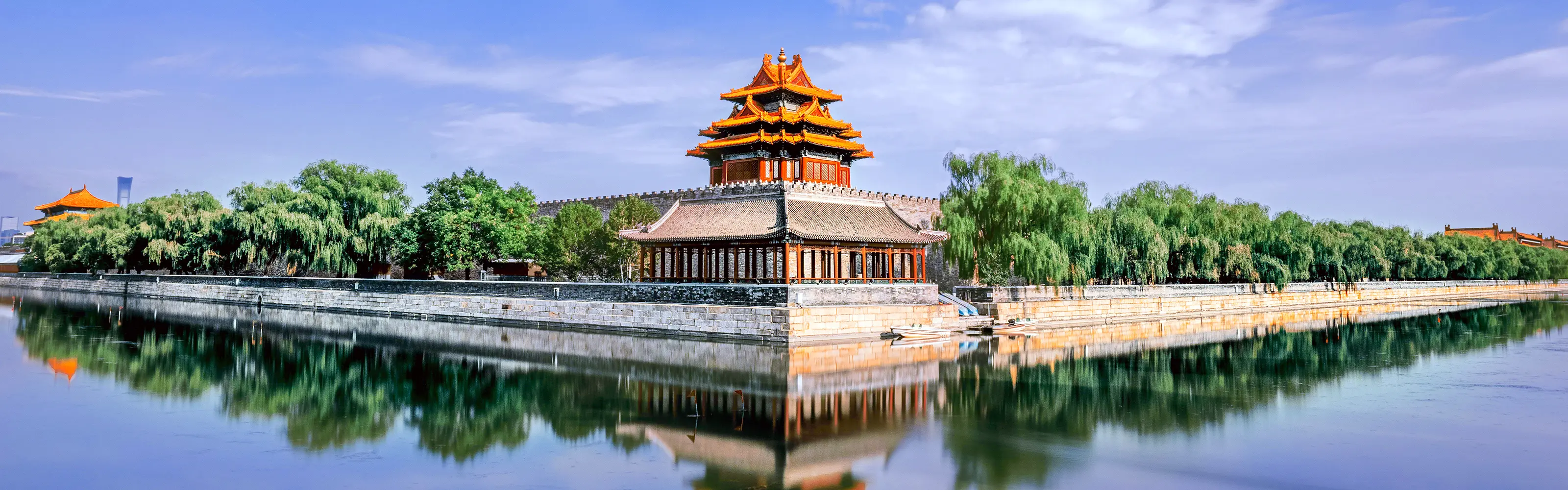
A palace that has been standing since 1420. How old is the Forbidden City? In 2026, the answer is 606 years old: older than the printing press reaching Europe, older than Columbus crossing the Atlantic.
The Simple Answer: How Old Is the Forbidden City?
Construction began in 1406, under Emperor Yongle [永乐帝], the third emperor of the Ming Dynasty. Construction finished in 1420. That is the date historians use as the official start point.
But “built in 1420” understates what actually happened across those six centuries. The building you walk through today is not quite the one Yongle inaugurated. It has been burned, rebuilt, expanded, stripped, and carefully restored across three very different chapters of history, each of which left its mark on what you see now.
Phase One: The Emperor Who Moved a Capital (1406–1644)
Emperor Yongle was not born to rule. He was the fourth son of the Ming Dynasty’s founder and had been posted as a regional prince to the north, governing the territory centered on what is now Beijing. When his young nephew inherited the imperial throne, Yongle raised an army and took power by force in a civil war known as the Jingnan Campaign. Legitimacy was immediately a problem.
His solution, among others, was architecture. Moving the imperial capital from Nanjing (the dynasty’s original seat) to his own power base in the north required justification. Building the largest, most imposing palace complex in human history provided it. Work began in 1406.
What’s more, the scale of the construction effort was enormous. Timber came from forests in Sichuan and Yunnan, hauled thousands of kilometers north. Workers quarried white marble near Beijing and cut it into massive flagstones for the ceremonial courtyards. The imperial court conscripted craftsmen from across the empire for their specific skills.
Construction finished in 1420. The imperial seat moved from Nanjing to Beijing the following year.
For the next 224 years, through 14 Ming emperors, the Forbidden City stood as China’s political and ritual center. Then in 1644, the Ming Dynasty collapsed. A rebel force under Li Zicheng occupied the palace briefly before Qing armies arrived to drive them out. As Li Zicheng retreated, he burned only parts of the outer court and several gate towers. The core inner palaces remained largely intact when the Qing took over.
Phase Two: The Qing Dynasty Rebuilds (1644–1924)
Emperor Shunzhi entered Beijing in 1644 and chose the Forbidden City as his seat. The Qing did not rebuild most buildings from scratch. They restored fire-damaged structures while fully keeping the original Ming layout and axial symmetry.
The Qing rebuilt all three main ceremonial halls: the Hall of Supreme Harmony, the Hall of Central Harmony, and the Hall of Preserved Harmony. They also reconstructed most residential palaces, inner courtyard buildings and auxiliary facilities. Still, the overall layout, the north-south axial symmetry, and the fundamental scale all follow Yongle’s original plan.
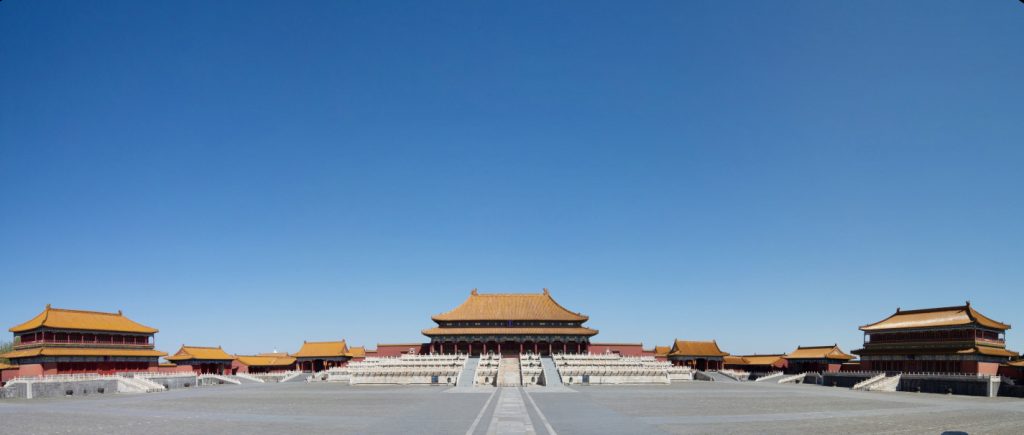
The Qing also added structures that have become defining features of the palace. The Nine-Dragon Wall [九龙壁], the imperial opera house Changyin Pavilion [畅音阁], and the imperial library Wenyuan Pavilion [文渊阁] are all Qing-era additions, built over the following 150 years.
Ten Qing emperors ruled from here across 268 years. The last, Puyi [溥仪], ascended the throne in 1908 at the age of two. The Qing Dynasty fell in 1912, ended by the Republican Revolution. The new Republic allowed Puyi to remain in the inner court as a private individual, a strange twilight arrangement in which a former emperor inhabited a former palace as a tenant, until 1924, when a warlord government finally expelled him.
The inner courts where he lived through over those 12 years had grown cold, quiet, and increasingly disconnected from the city growing up outside the walls. The empire had ended. The palace had not yet found its next life.
Phase Three: From Imperial Palace to the World’s Biggest Museum (1925–Now)
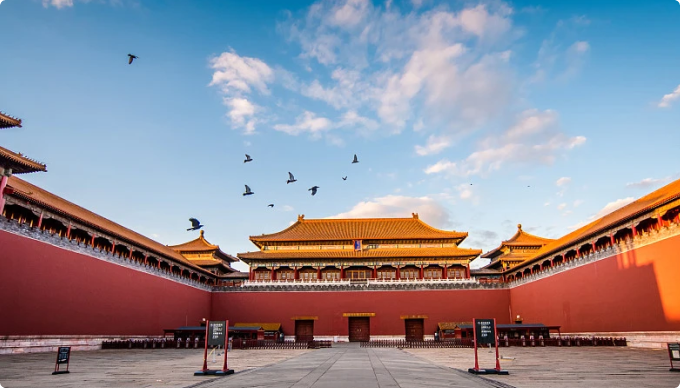
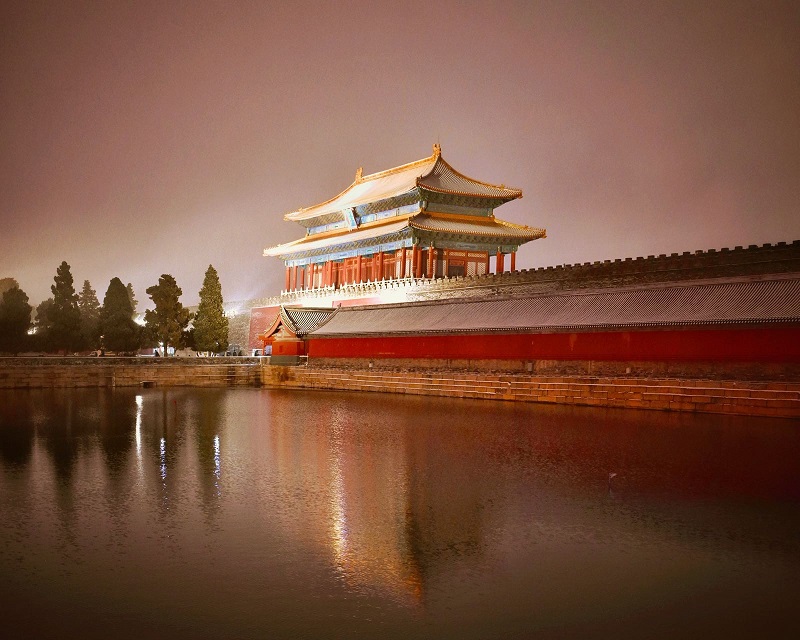
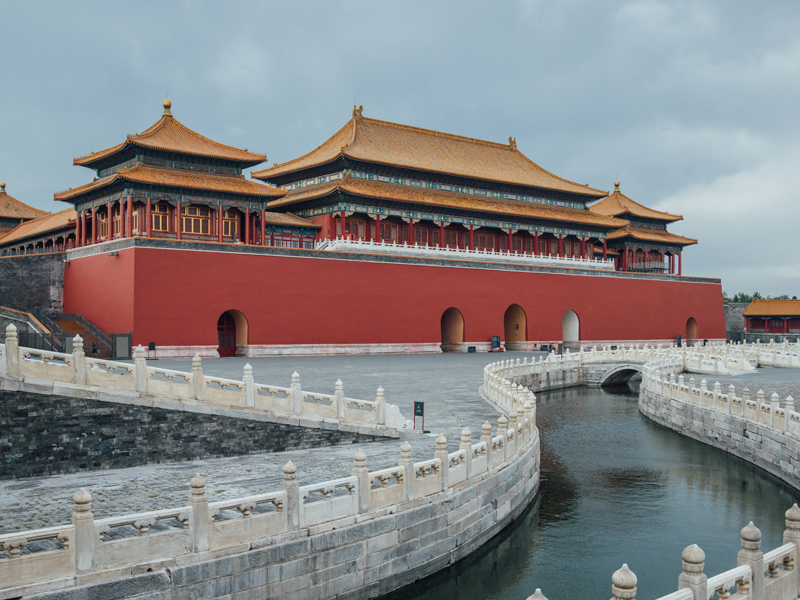
On October 10, 1925, the Palace Museum [故宫博物院] officially opened to the public. For the first time in the Forbidden City’s 505-year history, ordinary people could walk through the Meridian Gate freely for the first time.
That transition mattered. Before 1925, everything inside (the artifacts, the archives, the buildings themselves) belonged to the imperial family. After 1925, it became a public institution. The collection that had accumulated across two dynasties, now totaling over 1.8 million objects, became one of the world’s great museum holdings.
What’s more, UNESCO designated the Forbidden City a World Heritage Site in 1987, one of China’s earliest batch of World Heritage sites. Today it holds China’s highest tourism classification (5A) and attracts roughly 14 million visitors annually. You can see ongoing restoration work in various parts of the complex. Given that it is a 606-year-old wooden structure exposed to Beijing’s extremes of summer heat and winter cold, this is exactly as it should be.
FAQ
When was the Forbidden City built?
Construction of the Forbidden City began in 1406 under Emperor Yongle of the Ming Dynasty and finished in 1420.
How long did it take to build the Forbidden City?
Fourteen years. Work began in 1406 and construction finished in 1420.
Who ordered the construction of the Forbidden City?
Emperor Yongle [永乐帝], the third emperor of the Ming Dynasty, ordered the construction.
When did the Forbidden City become a museum?
On October 10, 1925, the Palace Museum officially opened, making the Forbidden City publicly accessible for the first time in its history.
Is the Forbidden City still standing in its original form?
Not entirely. The layout and scale follow Yongle’s original plan, but most of the buildings you walk through today are Qing-era reconstructions rather than original Ming structures.
For current visiting hours, ticket prices, and exhibition information, visit the Palace Museum’s official website.
Have questions about visiting? Email hello@jollyeast.com and we’ll get back to you within 24 hours. The experts here at JollyEast are more than happy to help!