




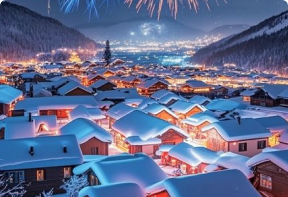
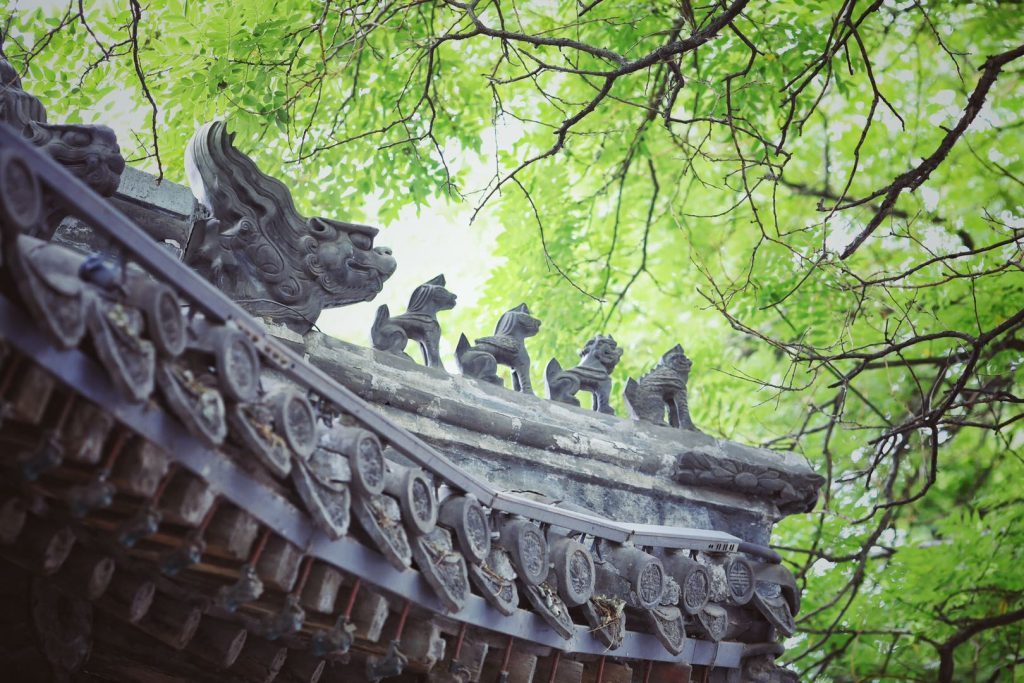
Beijing hutongs have a history of over 700 years, rooted in a deliberate urban creation. To understand what these lanes became culturally, the guide to Beijing hutong culture explores the social life, architecture, and etiquette that evolved from this historical foundation. In 1267, Kublai Khan chose a burned Jurchen capital as the site for his new world. What remained of the old city was ash and foundation stones. From that scorched ground, he built Khanbaliq — the City of the Khan — which would become the Beijing we know today. With it came the hutong: the narrow residential lanes that would carry the pulse of the city across seven dynasties and into the present.
Quick Summary
Beijing’s hutongs originated in the Yuan Dynasty (1271–1368) when Kublai Khan laid out Khanbaliq on a strict grid. The Ming Dynasty codified them into a social hierarchy; the Qing divided them by ethnicity. Over 5,000 hutongs were demolished in the 20th century. Fewer than 1,500 survived by 2003, and Beijing’s 2016–2035 Urban Master Plan now protects what remains.
Beijing Hutong History Begins: The Yuan Blueprint
The Yuan Dynasty (1271–1368) planned Khanbaliq on a strict cardinal grid: avenues running north-south, lanes running east-west, the imperial palace at the exact centre. It was a city designed to communicate power through geometry. Every road, every courtyard, every gate aligned to project the idea of an ordered universe with the emperor at its heart.
Between the grand avenues, planners carved a dense network of narrow residential lanes. These were the first hutongs.
The word itself is Mongolian in origin. Scholars trace it to hottog, meaning a cluster of gers (the round felt tents of the Mongolian steppe) gathered around a shared water source. In the new capital, the shared water source became the communal well, and the lanes leading to it became the hutongs. Every neighbourhood organised around one. Residents drew water each morning, exchanged news, and returned to their courtyard homes.
Marco Polo visited Khanbaliq during this period and described a city of remarkable order: straight streets, gates that locked at night, and a population living behind walls in ways he found simultaneously familiar and foreign. He was, without knowing the word, describing the hutong system.
Historical records from the Yuan court mention ‘sān bǎi bā shí sì huǒ xiàng’ — officially referred to as 384 fire lanes — as the official count of the city’s residential passages. The term “fire lane” reflects a practical concern: in a city of densely packed wooden structures, lanes needed to be wide enough to stop fire jumping between compounds, and to allow bucket brigades to move freely. In 13th-century Beijing, urban planning and fire prevention were the same discipline.
The Ming Transformation: Rank Written in Brick
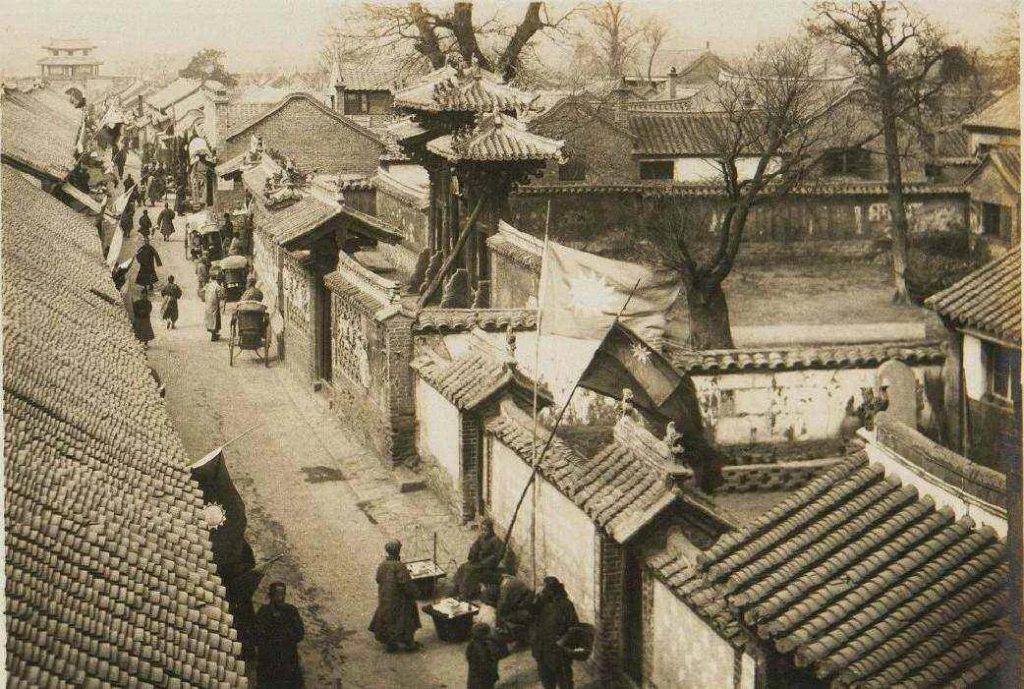
After the Yuan Dynasty, the Ming Dynasty (1368–1644) inherited and reshaped the hutong system, infusing it with distinct Chinese social order.
The Ming rebuilt the capital walls and repositioned the imperial palace slightly southward. Most importantly, they codified the siheyuan (四合院) — the courtyard house — as the standard residential unit for the elite. What had been a practical building form under the Yuan became, under the Ming, architectural law.
The Siheyuan Code: Status in Stone and Timber
A senior official’s compound could have multiple courtyards nested one behind the other. A minor official’s residence warranted only one. A merchant, however wealthy, faced restrictions on gate height and eave decoration. The Ministry of Rites enforced these rules, treating architecture as a branch of social order.
A household’s position within the hutong network became a status marker. Lanes closest to the imperial palace — in today’s Dongcheng and Xicheng districts — were reserved for princes, senior officials, and imperial family members. The further a hutong lay from the palace walls, the lower the resident’s rank. The city was a map of hierarchy, readable from above.
This period gave many hutongs their names. Some took the trades practiced in them: Lantern-Maker Lane, Bronze-Caster Lane, Bow-and-Arrow Lane. Others recorded natural features since paved over: Willow Tree Lane, Stone Well Lane. Liulichang (琉璃厂) — which became Beijing’s great street of scholars and antique dealers — dates to this era, established to house workers who made glazed tiles for the imperial palace.
The Qing Dynasty: A City Divided, a Culture Doubled
When the Manchu Qing Dynasty (1644–1912) took Beijing, they made a decision that reshaped the hutong world permanently.
The inner city — within the original Yuan and Ming walls — was reserved for Manchu bannermen and their families. Han Chinese residents relocated to the outer city, south of Qianmen Gate. Beijing became a physically divided capital almost overnight: Manchu north, Han south.
Two Hutong Worlds Running in Parallel
The inner city hutongs around Shichahai and the Drum Tower became the preserve of Qing aristocracy. Prince Gong’s Mansion (恭王府)[1], the largest private residence surviving from this period, stands in Xicheng District today as a monument to that concentrated wealth: eleven courtyards, a private garden with a full-scale Suzhou rockery, and enough rooms to run an administrative apparatus. The Palace Museum holds extensive records of Qing residential architecture from this era[2].
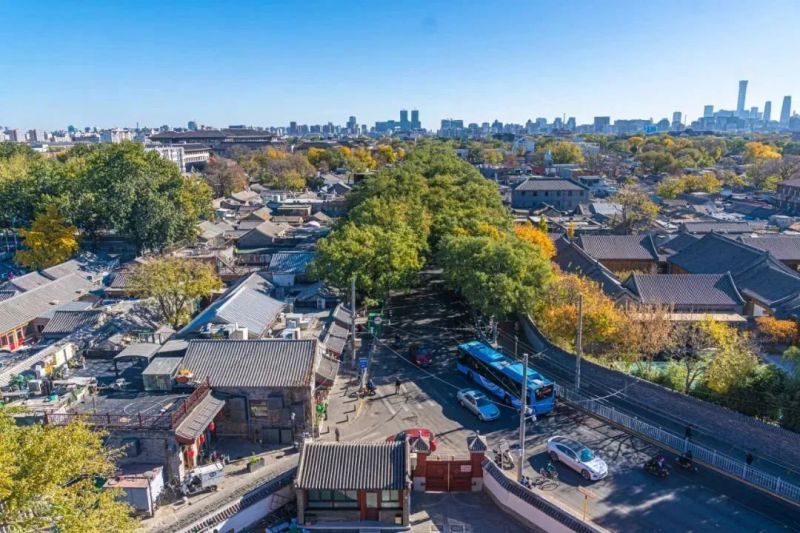
The outer city hutongs grew differently — denser, more commercial, more mixed. Dazhalan (大栅栏), the great market street near Qianmen, became a labyrinth of shops, teahouses, and performance venues. Beijing opera found its first permanent home there, performed for Han merchants and craftspeople who built a prosperous world in the shadow of an imperial city they were forbidden to inhabit.
By the late Qing, Beijing’s hutong network reached several thousand lanes. Each had its own micro-economy and social character. A traveller who knew the city could read a hutong’s history in the width of its lanes (broader in the inner city, narrower in the outer), the decoration of its gates (carved lintels for officials, plain brick for tradespeople), and the sounds from its walls (bird calls and chess in the aristocratic north, workshop clatter and street vendors in the mercantile south).
The Republic Era: Noble Compounds Become Crowded Courtyards
The fall of the Qing in 1912 began the process of unsealing the hutongs.
Bannermen who had lived in inner city hutongs for three centuries lost their stipends. Compounds that once housed single noble families were subdivided, sold, and rented to whoever could pay. The great Beijing courtyard houses — designed for one extended family — filled with multiple unrelated households, each occupying a wing or single room of what had been a unified domestic world.
With this subdivision, the dazayuan (大杂院) — the ‘big messy courtyard’ — was born. A single family’s private garden became a shared courtyard crowded with lean-to kitchens against ancient walls, coal sheds where pomegranate trees once stood, and laundry strung between carved columns of a reception hall.
Writers Who Captured the Hutong in Transition
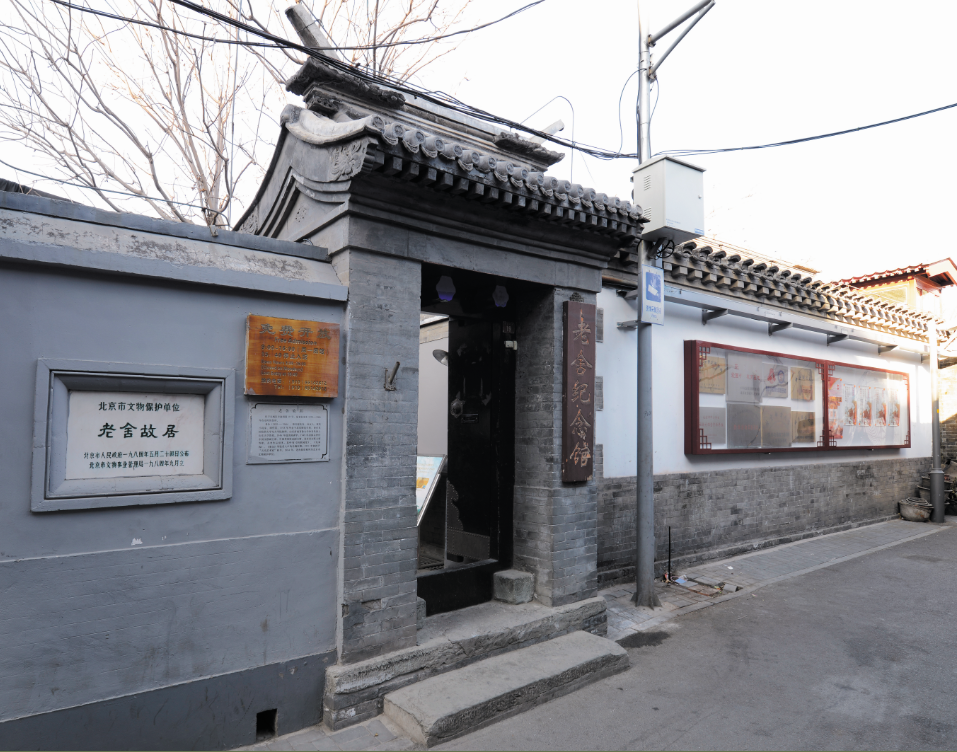
Republican-era writers came to the hutongs precisely because they were changing. Lao She, Beijing’s great chronicler, set much of his work in these lanes. Rickshaw Boy (骆驼祥子) follows its protagonist through a Beijing of narrow alleys, shared wells, and the grinding economics of hutong poverty. Zhang Henshui wrote serial novels from Zhuanta Hutong (砖塔胡同). Lu Xun spent years in Beijing’s hutong neighbourhoods, writing with the sounds of the lanes audible through his study window. Their work preserves the sensory texture of hutong history that no official record captures.
Twentieth-Century Demolition: The Hutong Under Threat
The People’s Republic brought a new urban ideology, and for Beijing hutong history, it was the most damaging chapter yet.
From the 1950s onward, planners demolished Beijing’s ancient lanes to build Soviet-influenced boulevards, work-unit housing blocks, and modern infrastructure. Chang’an Avenue — the great east-west axis past Tiananmen Square — consumed entire hutong neighbourhoods. Government ministry expansions cleared more. By the 1980s, the scale of loss had become visible even to planners who had approved the demolitions.
The 1990s real estate boom accelerated the destruction. Between 1990 and 2003, Beijing lost more hutongs than in all preceding decades combined. Long-established residents relocated to apartment blocks on the outer ring roads. The courtyards they left behind either came down or converted into bars, boutique hotels, and restaurants serving tourists who came to see what little remained.
Beijing Hutong History Today: Protection and a New Kind of Pressure
The Beijing Urban Master Plan (2016–2035) designated surviving hutongs as protected heritage. Demolition was prohibited and renovation required the preservation of traditional architectural forms. It was a significant shift, arriving later than it should have.
Protection did not mean freezing the hutongs in amber. Instead, the lanes that survived the bulldozers faced gentrification. Courtyard houses in Nanluoguxiang (南锣鼓巷) and Shichahai converted into boutique hotels and restaurants. Property values in the inner hutong zones rose past what the residents who defined the culture could afford.
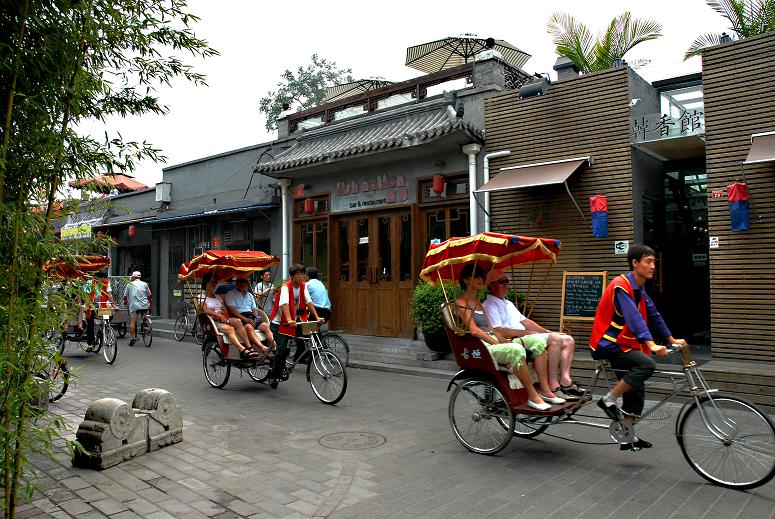
Yet the hutongs did not become museums. In the quieter lanes — Wudaoying Hutong, the side alleys off Maoer Hutong, the stretches of Guozijian Street tourists walk past without stopping — people still live as Beijingers have lived for centuries. Courtyards, grey brick walls, neighbours who know each other by name.
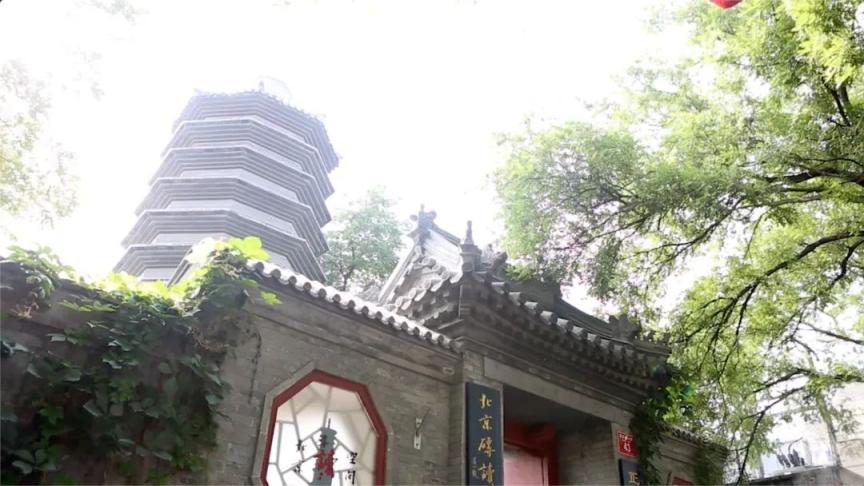
Zhuanta Hutong (砖塔胡同) in Xicheng District — the oldest surviving hutong in Beijing — carries this continuity most vividly. The Yuan-era brick pagoda (built around 1228 for the monk Wansong Laoren) still stands at its western end. Lu Xun lived here. Zhang Henshui wrote novels here. Today, residents hang laundry from bamboo poles a few metres from a 700-year-old monument. The scene the hutong made possible for Kublai Khan’s subjects, it makes possible still. To understand Beijing hutong history is to recognize that the city’s past is not confined to glass cases — it lives on, hanging out to dry in the afternoon sun.
To understand how hutong culture shapes daily life today, read our guide: Living Like a Beijinger: How to Experience Hutong Life, Not Just See It. For a complete introduction to the hutong system, see Beijing Hutong Culture: A Complete Guide for First-Time Visitors.
Frequently Asked Questions
How old are Beijing’s hutongs?
Beijing’s hutongs are over 700 years old. The system dates to the Yuan Dynasty (1271–1368). Zhuanta Hutong in Xicheng District is the oldest surviving example, continuously inhabited since the Yuan era.
How many hutongs are there in Beijing today?
Fewer than 1,500 traditional hutongs survived as of 2003.
Why were so many hutongs demolished?
More than 5,000 hutongs were lost in two waves: Soviet-influenced urban planning in the 1950s–70s, and the real estate boom of the 1990s–2000s.
What is the oldest hutong in Beijing?
Zhuanta Hutong (砖塔胡同) in Xicheng District is the oldest surviving hutong. It takes its name from a Yuan Dynasty brick pagoda built around 1228, which still stands at its western end.
What dynasty built the hutong system?
The Yuan Dynasty (1271–1368) established the hutong network as part of Kublai Khan’s planned capital Khanbaliq. The Ming (1368–1644) and Qing (1644–1912) dynasties expanded and refined the system over the following centuries.
What does “hutong” mean?
The word comes from Mongolian hottog, meaning a cluster of dwellings around a shared water source. In Yuan-dynasty Beijing, that water source was the communal well at the heart of each neighbourhood.
Planning a hutong visit? Whether you need a personalised itinerary, local recommendations, or help arranging your Beijing trip, we’d love to hear from you. hello@jollyeast.com and we’ll get back to you within 24 hours.