





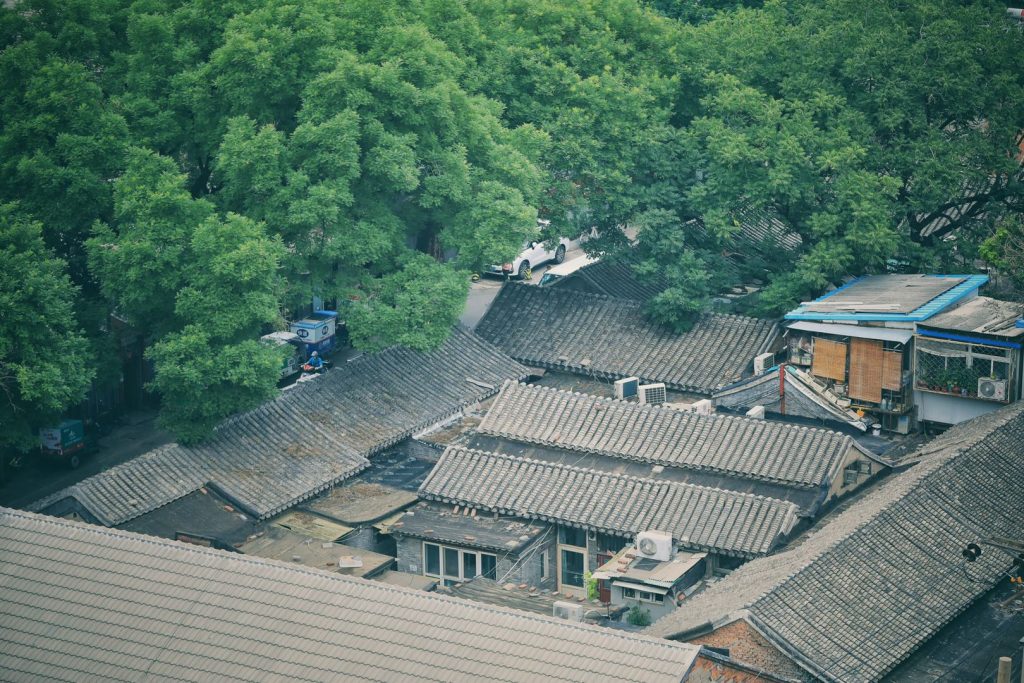
The Forbidden City tells you how emperors lived. The hutongs tell you how Beijing lives.
This guide covers everything a first-time visitor needs to understand Beijing hutong culture — what hutongs are, where they came from, what you’ll actually find inside them, and how to move through them without missing the point.
What Is a Hutong? Understanding Beijing Hutong Culture at a Glance
Technically, a hutong (胡同) is a narrow lane or alley formed by the outer walls of traditional courtyard homes. That’s the dictionary answer, and it’s almost useless.
The more honest answer: a hutong is a neighbourhood compressed into an alleyway. It’s the width of two bicycles, the height of a single storey, and it contains within it — in the space of a few hundred metres — everything a community needs to function: a breakfast stall, a hardware shop, an elderly man’s chess board set up on a folding table, a communal vegetable plot squeezed into a doorway, two cats asleep in the sun.
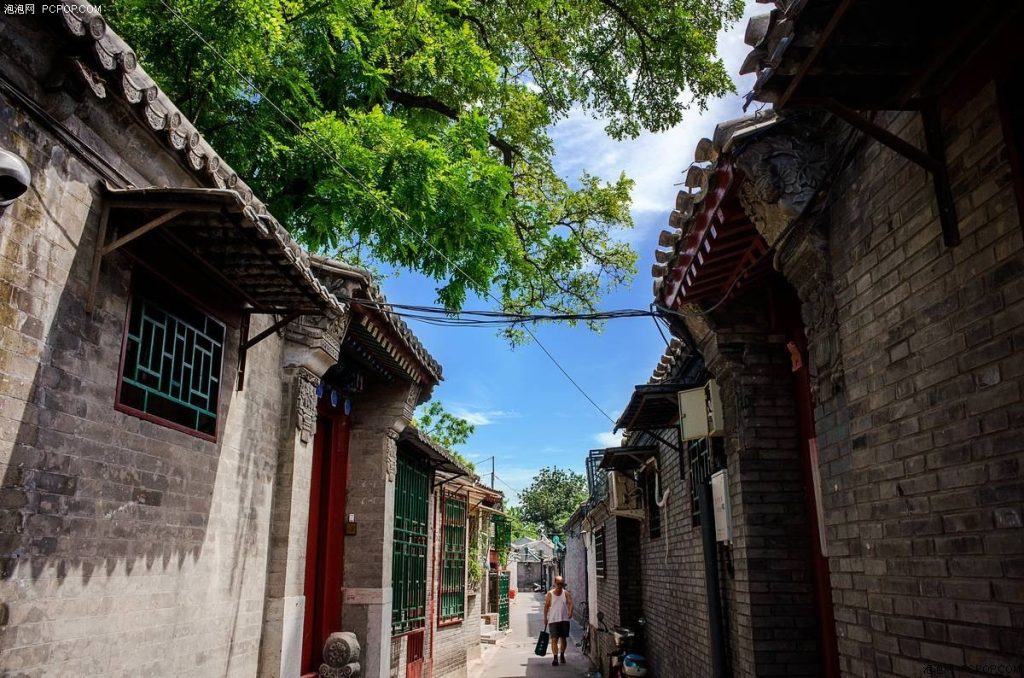
The word itself comes from Mongolian — hottog, meaning “water well.” During the Yuan Dynasty (1271–1368), when Kublai Khan rebuilt Beijing as his capital, neighbourhoods organised themselves around shared wells. The lanes between them became the hutongs. The word stuck through every dynasty that followed.If you want to go deeper into the social history behind these lanes, our Beijing Hutong History article covers 700 years in detail.
What makes Beijing hutong culture distinct from a typical city neighbourhood is the physical form of the homes that line them: the siheyuan (四合院), or courtyard house.
The Siheyuan: The Architectural Heart of Beijing Hutong Culture
To understand Beijing hutong culture, you need to understand what’s behind the walls.
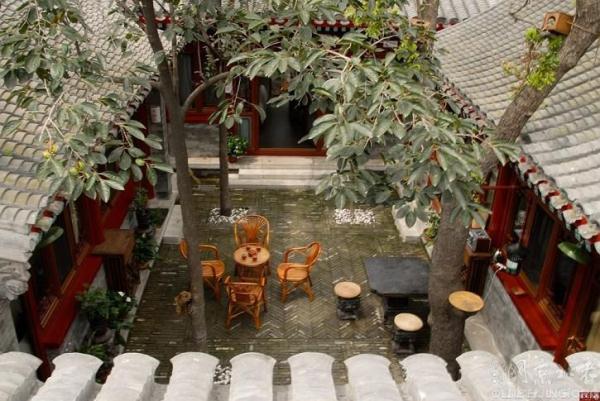
A siheyuan — literally “four-sided courtyard” — is a home arranged around a central open-air courtyard. Four buildings face inward: the main hall to the north (the most prestigious position, reserved for the senior generation), side rooms to east and west, and a gatehouse to the south. Everything faces the centre. The sky above the courtyard is a perfect rectangle.
This layout is not accidental. It encodes the Confucian values that shaped Chinese society for centuries: hierarchy (north is senior, south is junior), harmony (all parts face the shared centre), and the relationship between human beings and the natural world. The concept has a name: tiānrén héyī (天人合一) — heaven and humanity in harmony.
How to Read a Hutong Gate Before You Even Enter
The gate itself is a text, if you know how to read it.
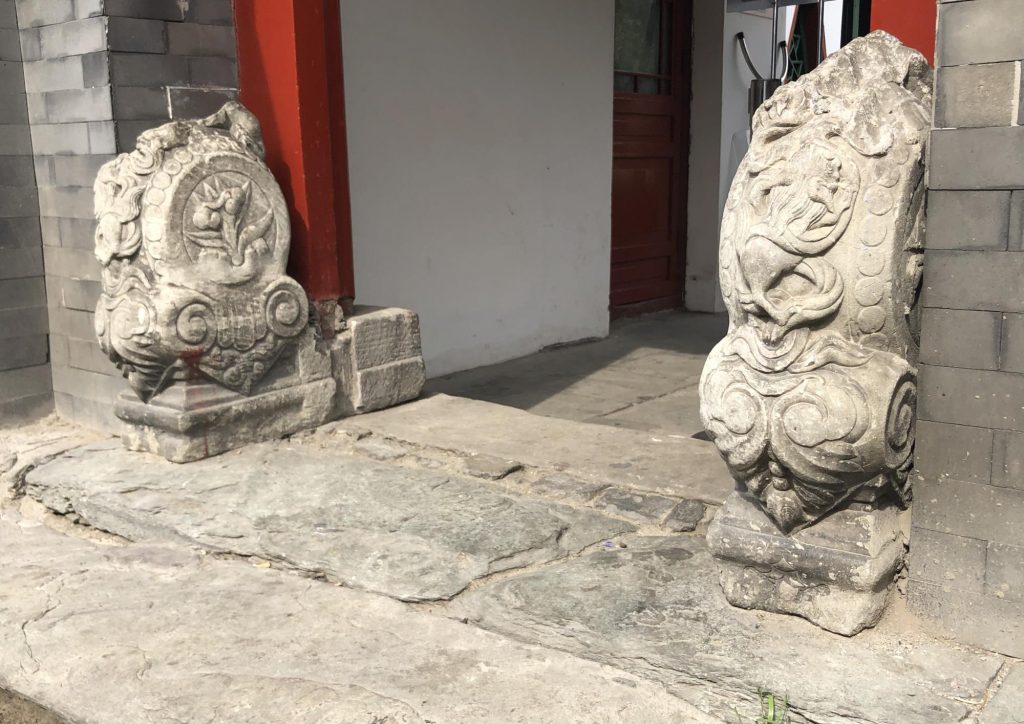
The drum-stones flanking the entrance (called mèndāng shí, 门当石) indicate the original household’s rank. Cylindrical drum-shaped stones signal a military household. Square-based stones signal a civil official. The higher the relief carving, the higher the rank.
Above the gate, look for the door lintel (hùdui, 户对) — pairs of cylindrical protrusions. Count them: a senior official’s gate had six; a minor official’s had four; a merchant’s gate had two. This system of stone codes was so widely understood in imperial China that it gave rise to the expression mén dāng hù duì (门当户对) — “matched gates and lintels” — which still means “a good match” in modern Mandarin, used today about marriage.
Step through the gate and you’ll encounter the yǐngbì (影壁) — a decorative screen wall that blocks the direct line of sight into the courtyard. Its function is partly spiritual (deflecting bad energy that travels in straight lines) and partly practical (preserving privacy from the street). Look for carvings of bats (fú, 蝠 — a homophone for luck), fish (abundance), and pomegranates (fertility and family prosperity).
The Threshold Rule: Essential Beijing Hutong Culture Etiquette
Never step on the threshold (门槛, ménjǐn). Step over it. This is one of the non-negotiable rules of hutong etiquette, and it carries real weight for older residents. The threshold is the boundary between public and private space. In a culture where home is deeply tied to family identity and ancestral continuity, it matters.
The Living Culture of Beijing’s Hutongs
What makes Beijing hutong culture different from a heritage site is that people still live in it. These are not museum streets. They are working neighbourhoods, with all the texture and friction that implies.
The Sound of a Hutong Morning
The hutong morning has a soundtrack unlike anything else in Beijing. Before 7am, before the tourist rickshaws and the coffee shops open, the lanes belong to the people who actually live there.
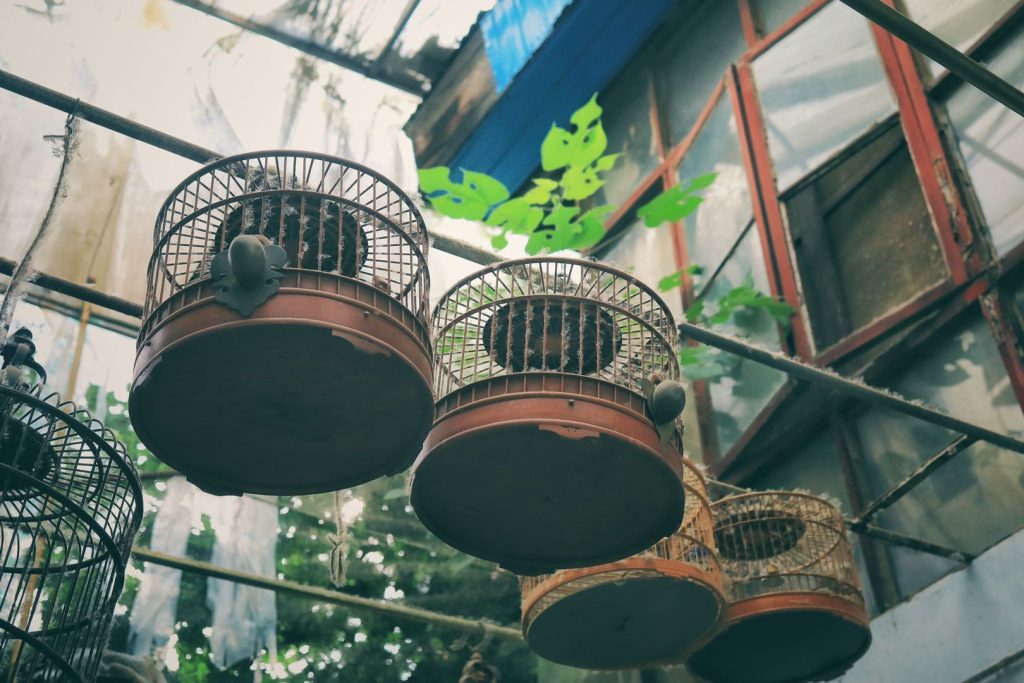
By 6am, the elderly residents are out. Some carry birdcages — letting their thrushes and larks sing in the cool air is a daily ritual that has no English equivalent. Others move through the slow arcs of tai chi. A vendor cycles through with a cart of fresh doufu, calling out in a flat Beijinger’s drawl. Someone’s coal briquette delivery is being stacked against a courtyard wall.
This is Beijing hutong culture at its most undiluted: communal, unhurried, built around relationships rather than transactions.
The Language of Hutong Neighbourliness
The most famous hutong greeting is “Chī fàn le ma?” (吃饭了吗?) — “Have you eaten yet?” To a visitor, it sounds like a question about food. To a Beijinger, it means something closer to I see you. You matter. It’s the hutong equivalent of “how are you,” except it carries the weight of a culture in which feeding people is one of the most fundamental expressions of care.
This kind of communal warmth — neighbours borrowing vinegar across a wall, calling to each other through open gates — is what Beijingers mean when they talk about hútong jīngshén (胡同精神): hutong spirit. It’s a sense of shared life that high-rise apartment culture has largely eroded, and it’s the reason many older Beijingers, despite the cramped conditions and shared facilities of many hutong homes, speak of their lanes with a nostalgia that has nothing to do with aesthetics.
The Best Areas to Experience Beijing Hutong Culture
Not all hutongs offer the same experience. Here’s a brief orientation to the best areas for first-time visitors exploring Beijing hutong culture:
Shichahai area (什刹海): The most atmospheric introduction for first-timers. Three interconnected lakes — Qianhai, Houhai, and Xihai — are linked by lanes including Yandai Xiejie and Baimic Xiejie. This area was an imperial canal terminus in the Yuan Dynasty and a noble retreat in the Ming and Qing. Today it retains a genuinely mixed character: elderly residents alongside bars and antique shops.
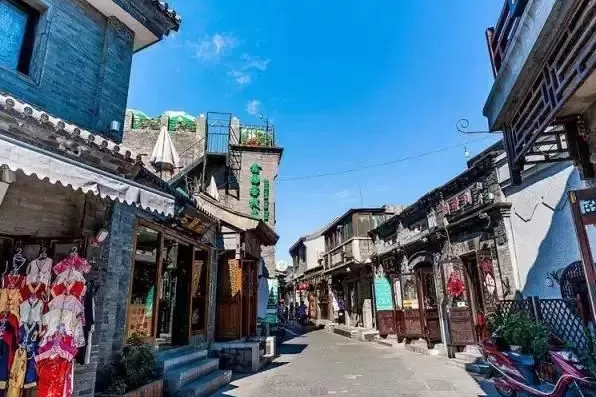
Nanluoguxiang (南锣鼓巷) and its eight side alleys: The most-visited hutong in Beijing, and for good reason — it preserves the Yuan Dynasty grid layout better than almost anywhere else in the city. The main street is busy; the side alleys (Maoer Hutong, Yuer Hutong) are quieter and more residential. Visit on a weekday morning to see it before the crowds.
Wudaoying Hutong (五道营胡同): The best hutong for a slower, more contemporary experience — independent design studios, craft beer, ivy-covered walls, and a significantly lower tourist density than Nanluoguxiang.
Guozijian Street (国子监街): Beijing’s only remaining hutong named for an imperial institution[2] — the National Academy, China’s highest seat of learning for centuries. Ming dynasty pailou gateways still mark both ends. This is the hutong for history and architecture.
Liulichang (琉璃厂): The cultural street of ink, brushes, and antique books — occupied by the same trade since the Qing court’s craftsmen settled here. The calligraphy shops and rare-book dealers give this hutong a distinct smell: ink and aged paper.
Cultural Dos and Don’ts for Visiting Beijing Hutong Culture Sites
Hutongs are living neighbourhoods. These aren’t rules for a museum; they’re the norms of a community.
Do ask before photographing people. Say: “Nín hǐo, wǒ kěyǐ pāi zhāng zhàopiàn ma?” (您好,我可以拍张照片吗?) — “Hello, may I take a photograph?” If they decline, smile and say “Bù hǐo yìsi dǎrǐo nín le!” (不好意思打扰您了!) — “Sorry to disturb you.” The photography reflex is the single fastest way to break the warmth of a hutong encounter.
Don’t step on the threshold. Step over it, always.
Do move slowly. The hutong rhythm is not the city rhythm. Walking fast, talking loudly, and checking your phone while walking are all signals that you’re passing through rather than present. Slow down.
Do look up and in. The most interesting things in a hutong are not on the main lane. They’re above eye level (carved lintels, crumbling ridge tiles, birds in cages hung from branches) and inside open gates (glimpsed courtyards, a grandmother shelling beans, a child doing homework).
Don’t enter courtyards without asking. A partially open gate is not an invitation. Knock, make eye contact, and ask: “Wǒ kěyǐ cānguān yīxià nín jiā de yuànzi ma?” (我可以参观一下您家的院子吗?) — “May I briefly look at your courtyard?” Most older residents in residential hutongs will say yes, and some will tell you stories that no guidebook contains.
Practical Information for Visiting Beijing’s Hutongs
Best time to visit: Arrive at a hutong before 9am for the quietest, most authentic experience. The crowds arrive with the tour groups after 10am. Spring (April–May) and autumn (September–October) offer the most beautiful light and the most comfortable temperatures.You can also read about how to experience hutong life like a local for practical tips beyond the tourist trail.
How to get around: Walk. The hutongs are 2–4 metres wide — some much narrower — and walking is the only mode of transport that lets you stop, look, and change direction freely. Shared bicycles work well for covering ground between neighbourhoods; lock up before entering any narrow lane.
Getting there: Most hutong areas are within walking distance of central Beijing subway stations. Nanluoguxiang has its own stop on Line 6. Shichahai is served by Beihai North (Line 6). Wudaoying is a five-minute walk from Yonghegong (Lines 2 and 5).
Frequently Asked Questions About Beijing Hutong Culture
What does “hutong” mean in Beijing hutong culture?
The word comes from Mongolian (hottog), meaning water well or lane. Beijing hutong culture developed in the Yuan Dynasty (13th century) as lanes between courtyard homes organised around shared wells.
Are Beijing’s hutongs safe for tourists?
Yes. Hutong neighbourhoods are among the safest areas in Beijing for walking. Traffic in the narrower lanes is minimal. The main hazard is the occasional electric scooter moving quietly and quickly — look before stepping sideways.
Can I enter a siheyuan courtyard?
Some are open to the public (Prince Gong’s Mansion, the Shijia Hutong Museum)[3]. Residential courtyards require asking permission first. Knock at a partially open gate and ask politely — many residents welcome curious visitors.
What’s the difference between a hutong and a siheyuan?
A hutong is the lane. A siheyuan is the courtyard house that lines it. You walk through a hutong; you live in a siheyuan. Both are central to understanding Beijing hutong culture.
Do I need a guide to visit Beijing’s hutongs?
Not for a general visit — the main hutong areas are well-signed and easy to navigate on foot. A local guide adds value if you want to understand the architecture and social history in depth, or if you want access to residents who don’t speak English.
How many hutongs are left in Beijing?
Estimates vary, but fewer than 1,000 traditional hutongs remain in the inner city, down from several thousand at their peak. The Beijing Urban Master Plan (2016–2035) now protects the surviving lanes from demolition[1].
Sources
1. Beijing Municipal Government — Work Report 2020
3. 恭王府博物馆 — Prince Gong’s Palace Museum Official Website