







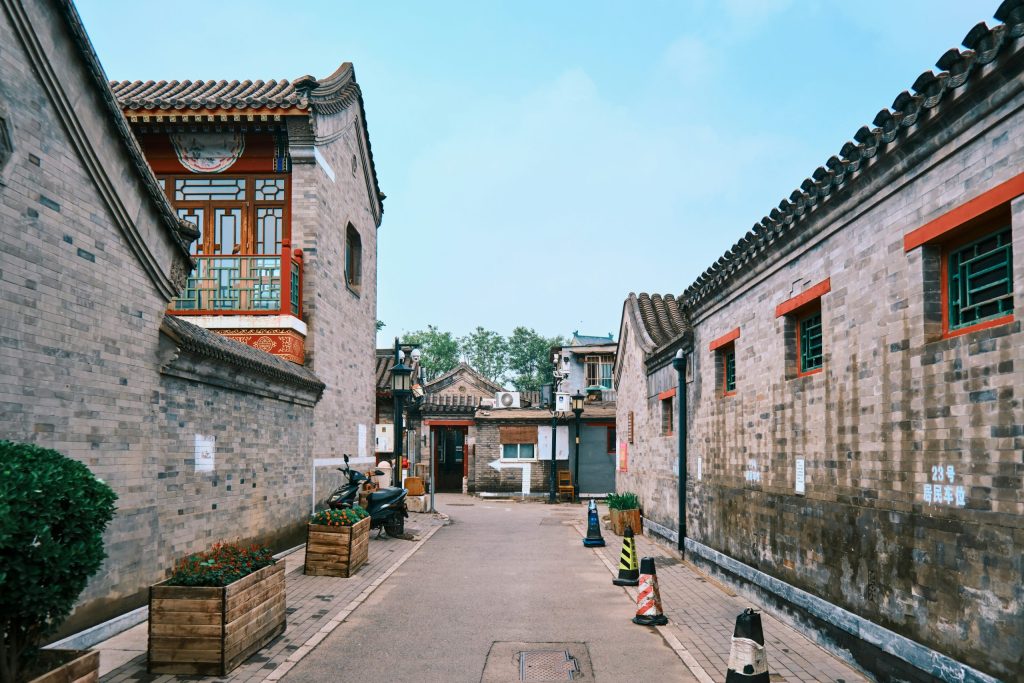
Most visitors to Beijing’s hutongs do the same thing: they walk in, take photos of the grey brick walls and red lanterns, buy a stick of candied hawthorn, and walk out. They’ve seen the hutongs.
But they haven’t lived them.
I grew up in Beijing, and the hutongs were never a tourist attraction to me. They were, for instance, the sound of a broom scraping flagstone at 6am. The smell of coal smoke mixing with soy sauce on a winter morning. The neighbour calling across the wall: “Chī fàn le ma?” — “Have you eaten yet?” — which in hutong culture isn’t really a question about food. It’s how people say I see you. You matter.
That’s what this guide is about. Not the hutongs you photograph, but the hutongs you feel. Here’s how to step off the tourist path and into the actual rhythm of Beijing’s most living neighbourhoods. For background on the hutong system itself, see our complete guide to Beijing hutong culture.
Quick Summary
To truly experience hutong life in Beijing, join a tai chi group at dawn (6–8am), eat zhajiang noodles before noon at a local jiācháng cài restaurant, visit a residential siheyuan courtyard in the afternoon, and browse the weekend night market at Wudaoying or Yangmeizhu. Arrive early, move slowly, and speak a few words of Mandarin — that’s the difference between seeing the hutongs and living them.
Start Your Morning the Right Way: Tai Chi at Dawn
Best time: 6:00–8:00 am | Locations: Beihai Park, hutong squares near Yangmeizhu
The hutong morning has a soundtrack. Indeed, before the coffee shops open and the rickshaw tours begin, the alleys belong to the people who actually live there.
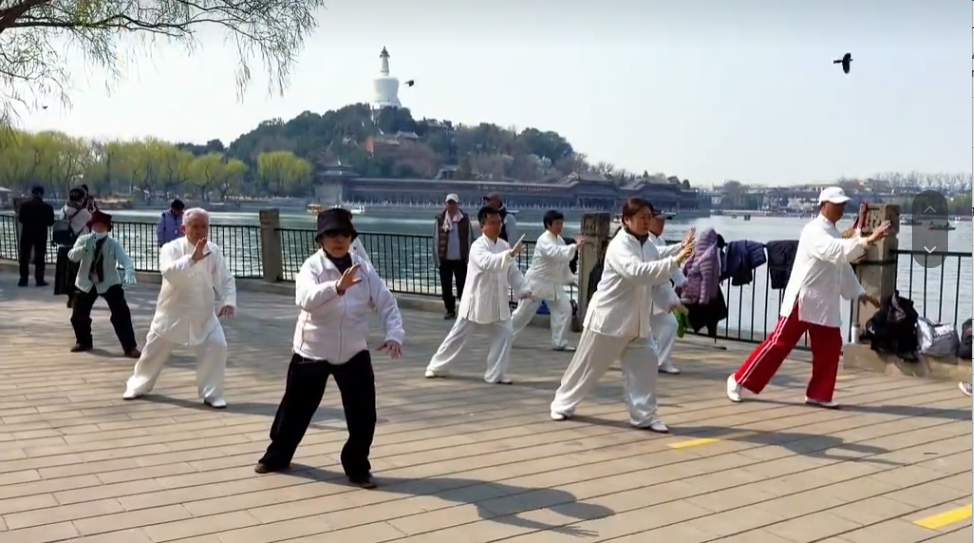
By 6 am, the elderly residents are already out. For instance, some carry birdcages, letting their thrushes sing in the cool air. Others move through the slow, deliberate arcs of tai chi — white-sleeved arms tracing circles that look like they’re rearranging something invisible in the air.
The best place to join them is Beihai Park (Exit B, Line 6, Beihai North Station — five minutes on foot). Near the White Dagoba and the pavilions of Qionghua Island[1], you will find groups of older Beijingers practising tai chi and sword dancing most mornings. Moreover, the atmosphere is unhurried and genuinely welcoming to curious outsiders.
If you’d rather stay in the hutongs themselves, look for the small open squares near Yangmeizhu Xiejie or the courtyard of Fangjia Hutong. These are, however, quieter, more intimate — a few neighbours stretching, a radio playing Peking opera somewhere nearby.
How to Join a Tai Chi Group
When you find a group, don’t hover at the edge taking videos. Instead, walk up, smile, and say:
“Wǒ kěyǐ yīqǐ liàn ma?” “May I practise with you?”
Indeed, nine times out of ten, someone will wave you in and show you where to stand.
Insider Note: Don’t look for a sign or an organised class. In fact, real hutong tai chi doesn’t advertise. The groups that are easy to find near tourist entrances often perform for tourists. Therefore, walk two or three alleys deeper — past the breakfast stalls and the old men with their newspapers — and you’ll find the real thing. After the session ends, moreover, if someone offers you a cup of jasmine tea, accept it. Indeed, that’s not just hospitality. That’s an invitation into hutong life.
Lunch the Beijing Way: The Dishes Locals Actually Eat
Best time: 11:00am–12:30pm (hutong kitchens close early) | Locations: Fangjia Hutong, Houhai area, Nanluoguxiang side alleys
Indeed, if there’s one thing that separates a real Beijing day from a tourist Beijing day, it’s what you eat for lunch — and when.
Hutong restaurants don’t run on restaurant hours. Instead, they run on neighbourhood hours. By 12:30pm, the best spots are packed. Furthermore, by 2pm, many close entirely. Therefore, arrive hungry before noon.
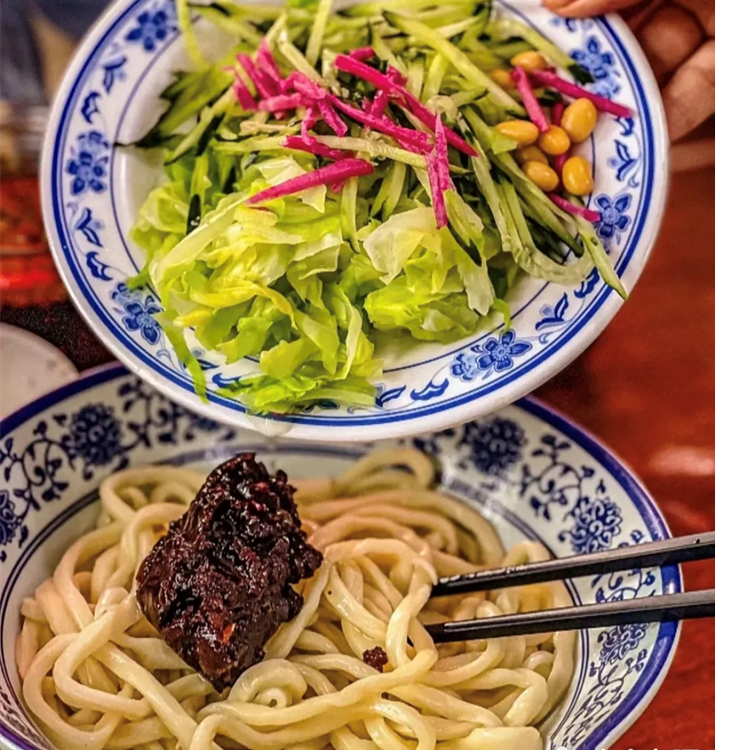
Zhajiang Mian (炸酱面) — The Everyday Classic
Hand-pulled noodles, topped with a dark, savoury pork and fermented soybean sauce, then piled with julienned cucumber, bean sprouts, and celery. You mix it yourself at the table. As a result, the first chopstick-twirl releases a smell that is, without exaggeration, one of the most comforting things in Beijing.
To order, simply say:
“Lái yī wǎn zhájiàng miàn, duō jiā cài!” “One bowl of zhajiang noodles, extra vegetables!”
Find it at Hǎiwǎn Jū in Fangjia Hutong, or at any bustling jiācháng cài (home-style cooking) shop full of elderly regulars — that crowd is your quality signal.
Lǔzhǔ (卤煮) — For the Adventurous
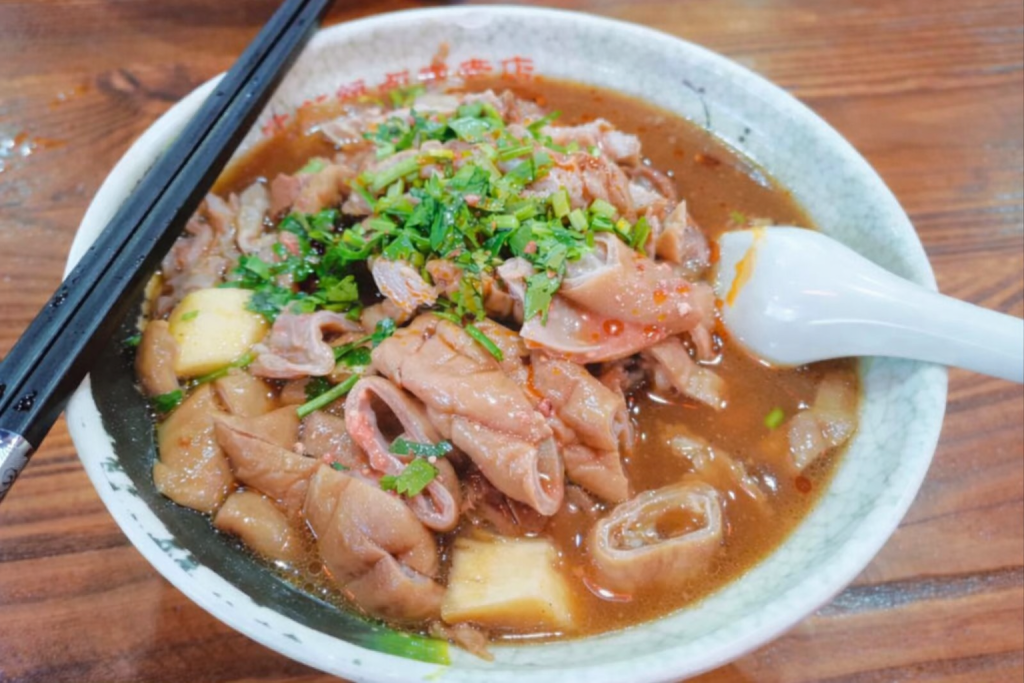
Slow-braised pork intestine, lung, and flatbread simmered in a deeply spiced broth, finished with garlic paste and chilli oil. First, the smell hits you — rich, funky, utterly unlike anything you’ve had before. It’s an acquired taste for outsiders. However, in Beijing, this is comfort food. The kind of thing people eat on cold mornings when they want to feel like themselves.
Try it at Běixīnqiáo Lǔzhǔ near Houhai. Order a small bowl first (xiǎo wǎn, 小碗) if you’re uncertain.
Dòuzhīr (豆汁儿) — The Real Test
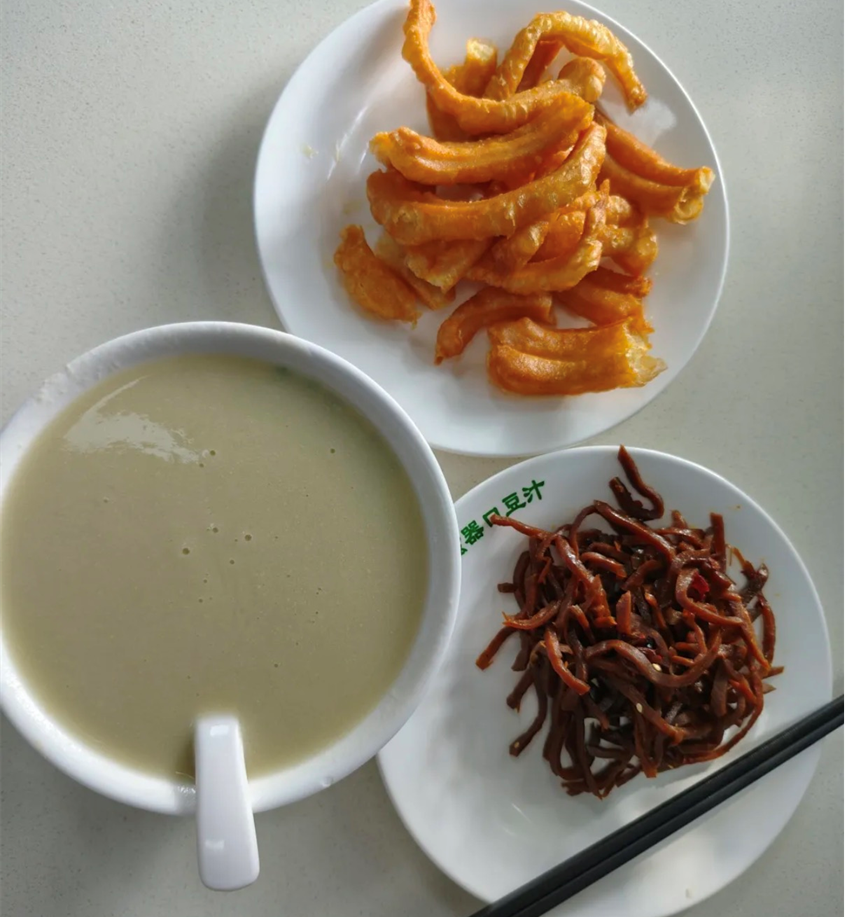
Fermented mung bean juice. Pale grey, sharply sour, slightly fizzy on the tongue. Beijingers drink it warm, with crispy fried dough rings (jiāoquān, 焦圈) on the side.
Here’s the honest insider truth: most people from outside Beijing don’t like it. Even many younger Beijingers don’t drink it. But ordering a cup at Cíqìkǒu Dòuzhī Diàn on Nanluoguxiang and attempting it — that act alone will earn you more genuine smiles from elderly Beijingers than any other single thing you do in the city.
Furthermore, if you can’t finish it, just laugh and say: “Xià cì zài shì!” (“I’ll try again next time!”) They’ll appreciate the honesty.
Insider Note: Hutong lunch crowds peak at exactly 12:00–12:30pm because that’s when the neighbourhood school lets out. Children flood the alleys, grandparents come to collect them, and the small restaurants fill up in minutes. Arrive at 11:30am to eat in peace, or at 12:45pm to eat with the neighbourhood — crowded tables, loud conversations, someone’s grandmother telling you that you’re using your chopsticks wrong. Both are valid Beijing experiences.
Afternoon: Knock on the Door of a Siheyuan Courtyard
Best time: 2:00–5:00pm | Locations: Yúér Hutong, Màoér Hutong, Gōngwáng Fǔ
The grey brick walls of Beijing’s hutongs hide something most tourists never see: the courtyard.
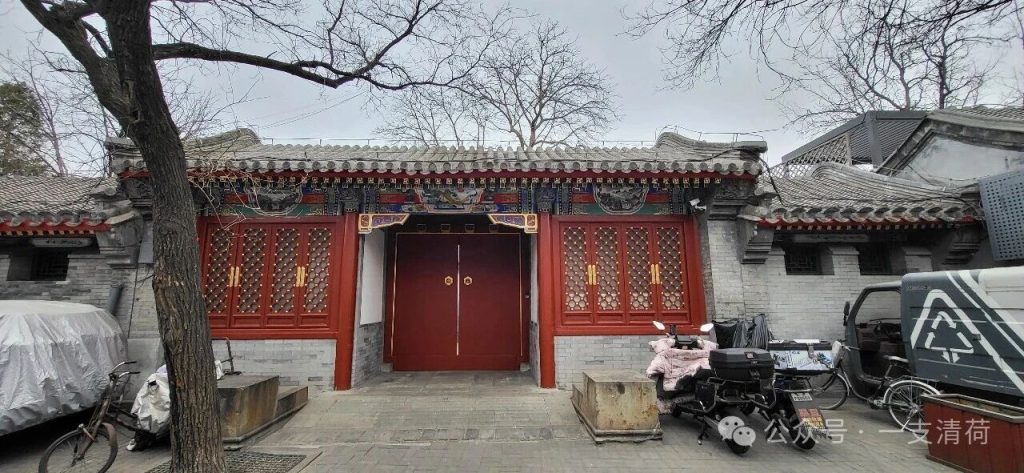
From the alley, a siheyuan (四合院) looks like a closed door. Notably, a heavy wooden gate — sometimes painted red, often worn to a dull brown — has a pair of stone drum-shaped door piers on either side. Those piers are a code: cylindrical drums signal a military household; square bases signal a civil official. In other words, centuries of social hierarchy, written in stone at knee height.
Indeed, what lies behind the gate is a world arranged around stillness. Four buildings face inward onto a shared courtyard — traditionally housing different generations of the same family. In the centre: a pomegranate tree (symbolising family abundance), a stone water basin, sometimes a few potted chrysanthemums. The sky above is a perfect square. The concept underlying the whole design is tiānrén héyī — heaven and humanity in harmony.
To see inside a real residential courtyard, try Yúér Hutong or the quieter sections of Màoér Hutong. When you find a gate that’s slightly ajar — a sign that someone is home and open to the world — approach and knock gently. Then say:
“Nín hǎo, wǒ kěyǐ cānguān yīxià nín jiā de yuànzi ma?” “Hello, may I take a brief look at your courtyard?”
Most older residents, especially those who’ve lived there for decades — will let you in. Moreover, they’re often proud of their homes and happy to talk. However, what they’re not looking for is someone who walks in silently, takes twenty photos, and leaves without a word.
What to look for inside:
- The yǐngbì (影壁) — a decorative screen wall just inside the gate, which deflects bad spirits and, more practically, curious eyes from the street
- Door carvings — bats (luck), fish (abundance), and pomegranates (fertility) carved into the woodwork
- The threshold — never step on it. Ever. It is considered deeply disrespectful, and to older residents, it still carries real meaning.
Insider Note: Older Beijingers in the hutongs are often lonely. Their children have moved to apartments in newer districts; their grandchildren are busy. A foreign visitor who knocks politely and shows genuine curiosity is, for many of them, a genuinely welcome interruption. Above all, the key is to move slowly, ask before touching anything, and leave the space exactly as you found it. Above all, if they offer you tea, you’ve done it right.
For a less nerve-wracking introduction to courtyard architecture, Gōngwáng Fǔ (Prince Gong’s Mansion) in the Shichahai area offers a beautifully preserved Qing dynasty siheyuan — book the tour in advance[2] and don’t miss the marble xīmén pailou gateway, the acoustic opera stage, and the hùnchuāng lattice windows designed to admit light while preserving privacy.
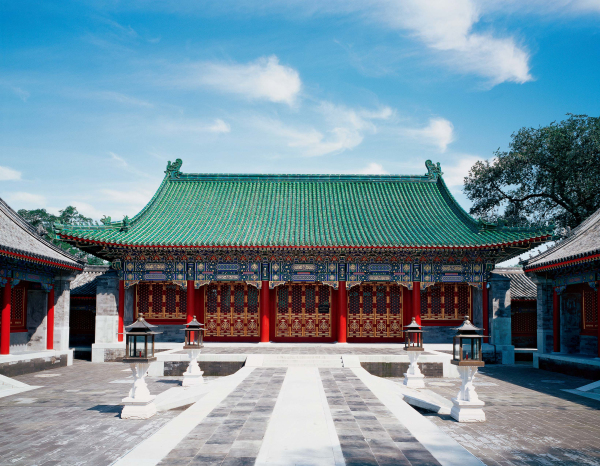
Evening: The Night Market and the Art of Slow Shopping
Best time: Saturdays/Sundays, 4:00–8:00pm | Locations: Wǔdàoyíng Hutong, Yangmeizhu Xiejie
By late afternoon, however, the hutongs shift gear. Notably, the morning belongs to the elderly; the evening belongs to the young and creative.
Wǔdàoyíng Hutong (五道营胡同), running east from Yonghegong Lama Temple, transforms on weekends into something between a neighbourhood market and an outdoor gallery. Consequently, independent designers set up along the ivy-covered walls: handmade leather goods, pressed botanical prints, vintage enamel pins, hand-poured candles. Furthermore, the craft beer bar Jing-A is here too, if you want somewhere to sit and watch the neighbourhood go by.
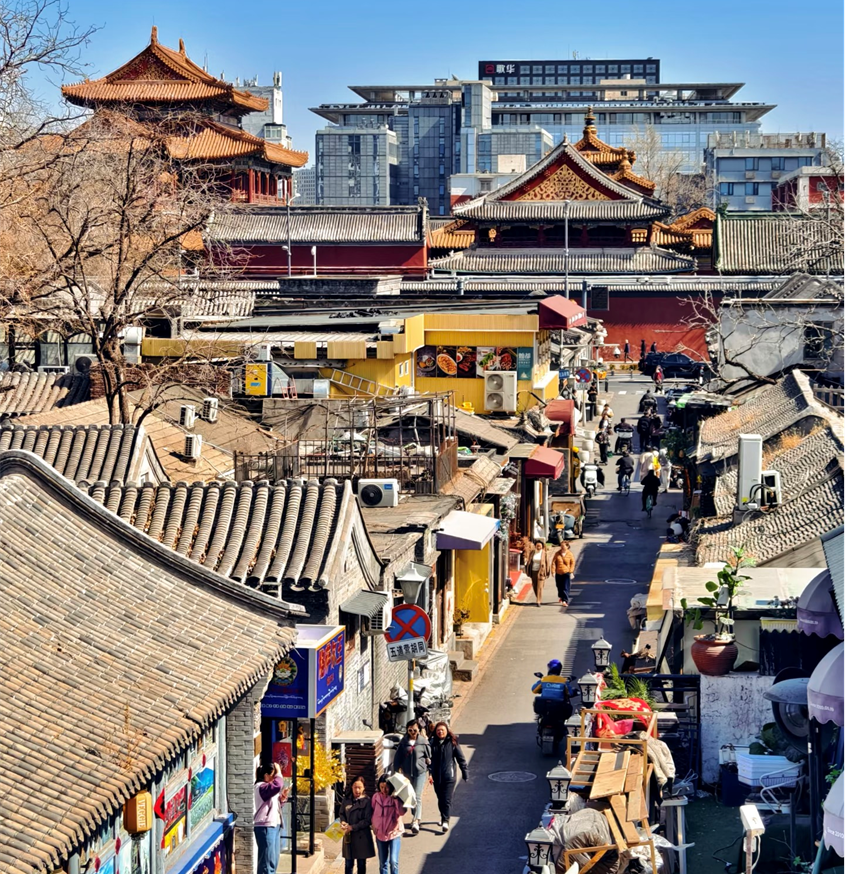
Yangmeizhu Xiejie (杨梅竹斜街) on Sunday afternoons draws a different crowd: second-hand book browsers outside Modernbook Bookstore, illustrations and Peking opera magnet art at the culture fair, hand-dipped candles and woodblock print cards.
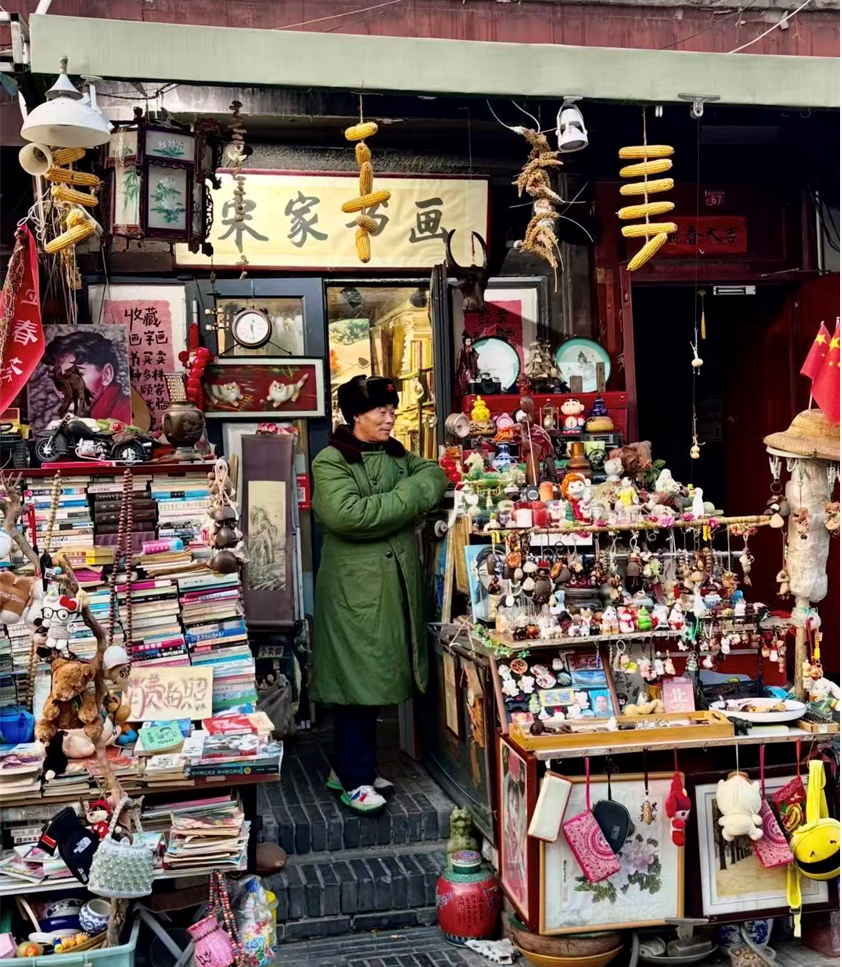
The point isn’t just to buy things. Instead, it’s to talk to the people selling them.
Ask a designer where she studied. Find out from the bookshop owner which book he’d pick up if he were a first-time visitor to China. Additionally, ask the ceramicist how long it took to make the bowl you’re holding. Use the phrase:
“Zhège yǒu shénme gùshi?” “What’s the story behind this?”
Indeed, most vendors in these hutong markets are young Beijingers who are genuinely excited about what they make. As a result, that question unlocks a conversation you won’t have in any shopping mall.
For bargaining at the more casual stalls near Houhai‘s north bank — jewellery, vinyl records, small antiques — a friendly opener is:
“Piányí yīdiǎnr ma?” “Could you go a little lower?”
Always smile when you say it. After all, in hutong culture, negotiation is a social ritual, not a battle. For more on which hutong neighbourhoods to visit, see our guide to the best hutongs in Beijing.
FAQ: Hutong Life in Beijing
How do I join a tai chi session in Beijing’s hutongs?
Show up at Beihai Park or a hutong square near Yangmeizhu between 6 and 8am. Find a group of elderly residents and approach with a smile. Say “Wǒ kěyǐ yīqǐ liàn ma?” — “May I join?” No booking or fee needed. Most groups welcome curious visitors.
Is it okay to visit a siheyuan courtyard as a tourist?
Yes, if you ask permission first. Find a gate that’s slightly open, knock, and ask politely. Most elderly residents welcome curious visitors — they are often proud of their homes. Prince Gong’s Mansion is a fully open alternative that requires no permission. For more on what you’ll find inside, see our guide to Beijing hutong culture.
What do Beijing locals actually eat in the hutongs?
The three classics are zhajiang mian (pork noodles), lǔzhǔ (braised offal stew), and douzhir (fermented mung bean juice). Arrive before noon — hutong kitchens close early, often by 2pm. Restaurants packed with elderly regulars are the most reliable quality signal.
When is the best time of day to visit Beijing’s hutongs?
Early morning (6–9am) for tai chi and neighbourhood sounds; late morning for food; afternoon for courtyard visits; weekend evenings for the hutong markets at Wudaoying and Yangmeizhu. For the best season to visit, see our seasonal guide to Beijing’s hutongs.
What’s the difference between hutong neighbourhoods in Beijing?
Nanluoguxiang is the most visited but historically significant. Wudaoying is more local and artsy. Maoer Hutong has the best Qing-era gate architecture. Yangmeizhu is ideal for creative culture. Shichahai combines waterfront scenery with traditional alley life. For a full breakdown, see our guide to the best hutongs in Beijing.

Continue exploring Beijing’s hutongs: learn the how hutongs evolved over seven centuries, discover the famous residents who shaped Beijing’s hutongs, find out the best time of year to visit, or follow our day-by-day hutong itinerary.
Planning a hutong visit? Whether you need a personalised itinerary, local recommendations, or help arranging your Beijing trip, we’d love to hear from you. Email us at hello@jollyeast.com and we’ll get back to you within 24 hours.