Where to Visit the Great Wall of China: 6 Beijing Sections Compared
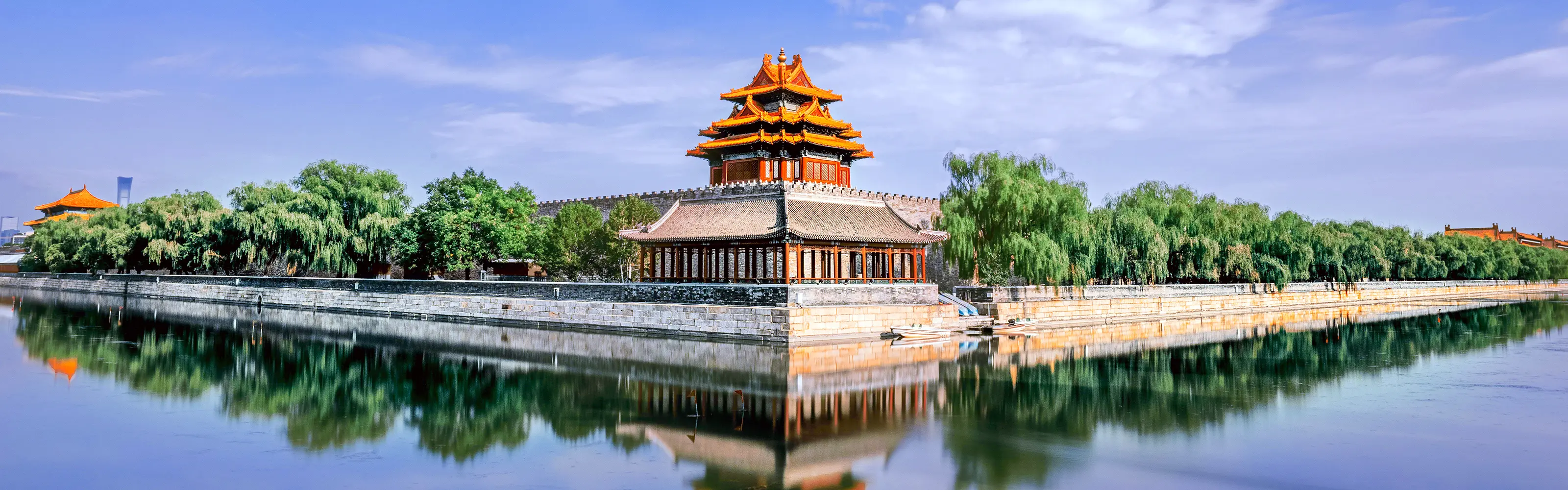
Most people asking where to visit the Great Wall of China are really asking: Which section fits my trip? Beijing alone has more than a dozen accessible sections, and they are not interchangeable. Some are restored and easy to reach; others consist of original 600-year-old stone with barely a path. This guide covers six sections worth your time, from the most famous to the most photogenic, with honest notes on what each one actually offers.
Quick Summary
Most accessible: Badaling, direct high-speed rail from central Beijing, 20–40 minutes
Best for scenery: Mutianyu in autumn (red leaf season from mid-October to early November)
Best for photographers: Jinshanling, ideal for shooting at sunrise and sunset
Most original: Simatai, the only section that retains intact Ming-dynasty construction without modern restoration
Most unusual: Huanghua Cheng Water Great Wall, where a reservoir flooded three sections of wall
1. Badaling: The Most Visited Section
Badaling (八达岭 [Bādálǐng]) is what most people picture when they think of the Great Wall: wide, well-preserved, and built for impressive photographs. It sits at 1,015 metres above sea level and was the first section opened to tourists. Over 100 million visitors have walked alonged it, including more than 300 world leaders and heads of state. It is a UNESCO World Heritage Site and a 5A-rated scenic area, the highest designation in China’s tourism system.
Badaling Great Wall
The wall is divided into a north section (12 watchtowers, steeper) and a south section (7 watchtowers, gentler). A single ticket covers both. The north section’s highest point, North Tower 8, is called 好汉坡 [hǎohàn pō] (Hero Slope) and is the most photographed spot. The south section offers better light for late afternoon photography.
Best seasons: March to May for mountain flowers; September to November for autumn colour and clear skies.
Tickets: 40 RMB peak (April–October), 35 RMB off-season. Students and elderly: 25 RMB. Under-18 and over-60: free.
Transport: High-speed rail from Beijing North or Qinghe Station, 20–30 minutes. Bus 877 from Muchengdi, about 2 hours, 6 RMB. By car, navigate to P1 Car Park.
Cable cars: Gondola to North Tower 7, single 100 RMB / return 140 RMB. Ground cable car to South Tower 4, single 80 / return 120 RMB. Toboggan slide from North Tower 4, cash only on site.
2. Mutianyu: The Favourite Among International Visitors
Mutianyu (慕田峪 [Mùtiányù]) in Huairou District is the most popular section among international visitors, and for good reason. The wall here is 5,400 metres long with 22 watchtowers, the open section runs 2,250 metres, and the landscape around it is densely forested hillsides that turns spectacular in autumn. Three watchtowers built side by side on a single platform, known as the Zhengguantai [zhèngguāntái], are an architectural oddity found nowhere else on the entire wall.
The Great Wall at Mutianyu in autumn
Former US President Bill Clinton, UK Prime Minister John Major and dozens of other foreign heads of state have all walked Mutianyu. Tower 15 was used as a filming location in the movie If You Are the One 2. Tower 14 has a wall where visitors can leave marker-pen notes.
Best seasons: Mid-October to early November for the red leaf season. April for the Mountain Flower Festival, with apricot and peach blossoms across the hillsides.
Tickets: 45 RMB adult, 25 RMB student. Park shuttle bus 15 RMB return (recommended; the walk to the cable car base is 3.5 km uphill).
Cable cars: Western enclosed gondola to Tower 14, single 100 / return 140 RMB. Eastern chairlift to Tower 6, same price. Toboggan slide (1,580 m) from Tower 6: 100 RMB. The two systems use separate tickets.
Transport: Direct tourist bus from Chaoyang Gate subway station Exit A, departing 07:30–09:00. Bus 916 from Dongzhimen to Huairou, then taxi.
3. Juyongguan: The Pass That Guards Beijing
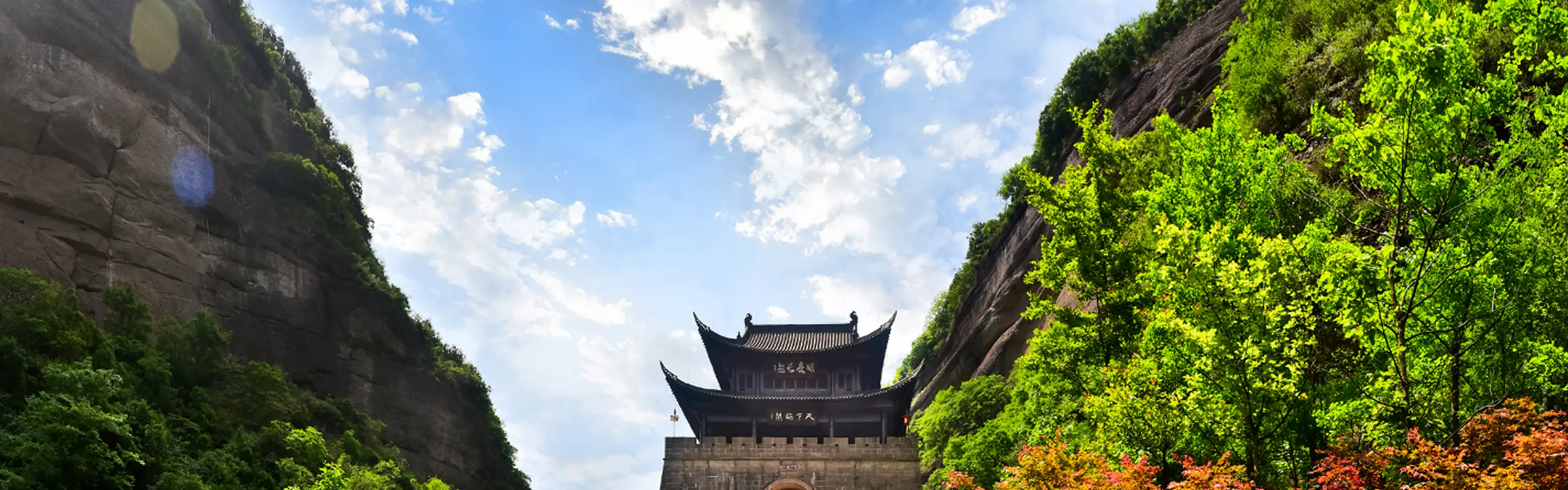
Juyongguan (居庸关 [Jūyōngguān]) is one of the three major passes of the Ming Great Wall and has been a military checkpoint for more than 2,000 years. The gatehouse carries a plaque reading “Heaven’s First Pass” (天下第一雄关 [tiānxià dìyī xióngguān]). Furthermore, it is one of the most convenient sections to reach: 50 km from central Beijing along the Jingzang Highway.
Juyongguan Great Wall
Unlike Badaling, which is flat enough for a leisurely walk, Juyongguan is genuinely steep. Some steps require climbing on hands and feet. However, the reward is a wall that feels more like genuine hiking. The east route (from the north gate) is gentler and reaches the highest point at Tower 6 in about an hour. In contrast, the west route is more challenging, reaching Tower 12 in 2–3 hours. A full east-west loop runs 5–6 km and takes 3–5 hours.
Inside the pass, the Cloud Platform (云台 [Yúntái]) is a white marble Yuan Dynasty arch with Buddhist carvings and inscriptions in six scripts. It is one of the finest pieces of medieval stonework accessible to tourists in Beijing.
Best seasons: Late March to mid-April for “train through the flowers” season, when the S2 railway passes through the valley during the blossom period. October to November for autumn colour.
Transport: Bus 919 (slow service) from Deshengmen, alight at Juyongguan. Drive to Car Park 3 (near Yuntai); parking fee is 10 RMB.
4. Jinshanling: The Photographer’s Great Wall
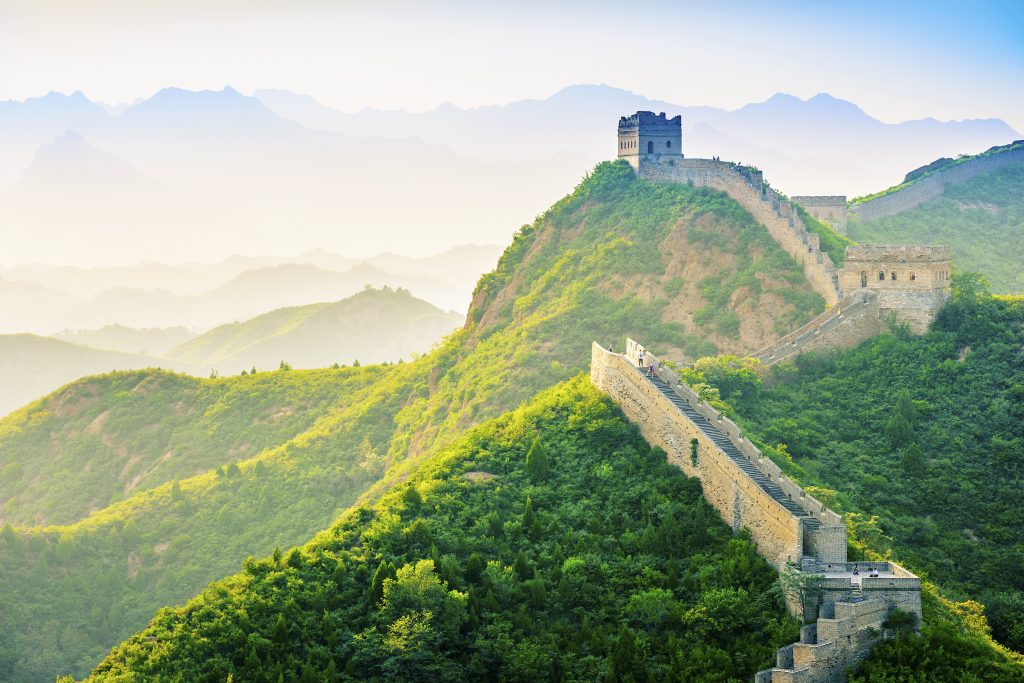
Jinshanling (金山岭 [Jīnshānlǐng]) sits on the border between Beijing’s Miyun District and Hebei Province, 130 km from central Beijing. It was built and personally overseen by Qi Jiguang (戚继光 [Qī Jìguāng]), the Ming-dynasty general who also modernised the wall’s military architecture. The result is one of the most varied and photogenic sections anywhere: watchtowers of different heights, a “Brick-Text Wall” where soldiers’ names are still visible in the masonry, and open ridgelines with unobstructed views in both directions.
Jinshanling Great Wall
Jinshanling is the first choice for photographers. In particular, sunrise and sunset shots from the wall, particularly from the area around Little Jinshanling Tower (小金山楼) and General Tower (将军楼), are among the most reproduced Great Wall images in the world. After summer rain, a sea of clouds forms in the valley below the wall. Additionally, the autumn red leaf season peaks around 15–20 October.
Best seasons: Early April for the apricot blossom festival; mid-October for red leaves.
Transport: By car, follow the Jingcheng Expressway to Jinshanling Exit,130 km / 2 hours from Beijing. Tourist bus from Dongzhimen, 50 RMB, departs 08:00.
5. Huanghua Cheng Water Great Wall
Huanghua Cheng (黄花城 [Huánghuāchéng]) Water Great Wall in Huairou is unlike any other section. When the local reservoir was built in the 20th century, the water level rose high enough to submerge three sections of Ming-dynasty wall. The result is a landscape where stone watchtowers stand half-submerged in a lake, with the rest of the wall climbing up the surrounding hills. Rowing a boat past a flooded Great Wall is an experience that cannot be replicated at any other site in Beijing.
Huanghua Cheng Water Great Wall
Beyond the water section, the park includes a 600-year-old Ming-dynasty chestnut orchard (you can pick your own in autumn), a glass-bottomed walkway above the submerged wall section, a forest train, a glass toboggan and a rowing area. As a result, it is one of the most activity-dense Great Wall parks in the region.
Best seasons: April for mountain peach and apricot blossom; October to November for autumn leaves and chestnut harvest.
Transport: By car to P3 Car Park, 20 RMB per day. Take Bus 916 express from Dongzhimen to Nanyuanyuan Three District, then transfer to the Huairou–Water Great Wall shuttle bus.
6. Simatai: The Original Wall
Simatai (司马台 [Sīmǎtái]) in Miyun District is the only section of the Great Wall in China that retains the original Ming-dynasty construction without post-1980s restoration. The Times of London named it one of the 25 must-see landscapes in the world. UNESCO has designated it the “Original Great Wall”. The wall here crosses genuinely vertiginous terrain: single-edge sections where one side drops away entirely, a “sky ladder” section at 85 degrees, and a sky bridge between two peaks.
Simatai Great Wall
Simatai is built beside the ancient town of Gubei Water Town (古北水镇 [Gǔběi Shuǐzhèn]), a reconstructed Ming-Qing settlement at the base of the wall that operates as a hotel and entertainment complex. The combination of the original wall above and the atmospheric town below makes Simatai worth a longer visit or an overnight stay. Moreover, night tours are available on Fridays and Saturdays, with cable cars, floodlit wall sections and view over the lit-up ancient town.
Best seasons: Spring wildflowers (April–May), summer sea of clouds after rain, October red leaves, and winter snow all offer distinct experiences.
Tickets: Hiking-only 40 RMB. Single cable car combo: 150 RMB. Return cable car combo: 220 RMB. Night tours (Fri/Sat only): 120 RMB. Advance reservation required; three timed entry sessions daily: 10:00, 12:00, 14:00.
Transport: By car, Jingcheng Expressway to Gubei Water Town P1 Car Park, about 120 km and 1.5–2 hours. Tourist bus departs from Dongzhimen, 48 RMB, 1.5–2 hours.
How to Choose
If this is your first visit and easy transport is your top priority, Badaling is the answer. For better scenery with manageable crowds, Mutianyu in autumn is hard to beat. Photographers and visitors seeking a remote wilderness Great Wall will find Jinshanling well worth the longer journey. For something nobody else in your group has done, the submerged sections at Huanghua Cheng or the original stonework at Simatai will leave you with fond memories to recount at home..
Which section of the Great Wall is closest to Beijing city centre?
Juyongguan is the nearest major section, about 50 km from central Beijing accessible by public bus from Deshengmen in under 90 minutes. Badaling follows at around 75 km, though the direct high-speed rail makes the travel time shorter in practice (20–30 minutes from Beijing North Station). Both are ideal for a half-day trip with no early start required.
How long does it take to visit the Great Wall from Beijing?
Allow a full day for any section. One-way travel time ranges from 40 minutes to 2 hours, depending on the section and transport method. Most visitors spend 2–4 hours exploring the wall. Badaling, accessible by high-speed rail, offers the fastest door-to-door journey. Jinshanling and Simatai, located farther afield, require more advance planning and are better suited to an early-start day trip or an overnight stay.
What is the best time of year to visit the Great Wall?
Autumn (late September to early November) is widely regarded the best season. Temperatures are comfortable, skies are clear, and the hillsides around most sections turn red and orange with seasonal foliage. Spring (March to May) is the second-best option, with mountain blossoms framing the wall. Summer is hot and humid, with the highest visitor numbers. Winter is cold but often uncrowded and offers dramatic snow photographs at sections like Simatai.
Is the Great Wall suitable for first-time visitors with no hiking experience?
Yes, if you choose the right section and use the cable cars. Badaling’s south route and Mutianyu’s western cable car route both enable visitors without hiking experience to reach proper viewpoints and walk a stretch of the wall at a comfortable pace. Jinshanling and Simatai have steeper terrain and are better suited to visitors who are comfortable with uneven ground and sustained climbs.
Do I need to book Great Wall tickets in advance?
Yes, this applies to all major Great Wall sections. Badaling, Mutianyu, Juyongguan and Simatai all require advance online reservation, and tickets for peak dates (Golden Week, May Day, weekends in the red leaf season) sell out days or weeks ahead. Book through the official scenic area websites or through established travel platforms. Simatai additionally requires pre-booking for timed entry slots all year round.
Have questions about visiting? Email hello@jollyeast.com and we’ll get back to you within 24 hours.
Great Wall with Kids and Elderly: Routes, Tips and What to Pack
Bringing the whole family to the Great Wall is completely possible, but the choice of section and route matters greatly. Visiting the Great Wall with kids and elderly relatives requires a different plan than a solo hike: you want cable cars, gentle gradients, shorter loops, and a clear exit strategy if energy runs low. Fortunately, both Badaling and Mutianyu are family-friendly, with complete facilities enabling easy access to viewpoints for seniors and kids.
Quick Summary
Best section for families: Mutianyu for scenery and the toboggan slide; Badaling for the most convenient transportation
Key tip: Cable cars at both sites help seniors and young kids reach viewpoints without steep climbs
Stroller reminder: Strollers are not feasible on steep, uneven Great Wall steps. Use a baby carrier or hip seat for children under 3
Badaling recommended route: South line via ground cable car to South Tower 4, then flat walking to South Tower 7
Mutianyu recommended route: West cable car up to Tower 14, ridge walk eastward, toboggan slide down from Tower 6
Badaling: The Most Accessible Option
Choose Badaling if transportation convenience is your top priority. It is the only Great Wall section with direct high-speed rail from central Beijing, saving time on shuttle buses, long transfers and tiring journeys before sightseeing.
The train to Badaling Great Wall
Getting There
High-speed trains from Beijing North Railway Station or Qinghe Railway Station reach Badaling Great Wall Station in 20–40 minutes, with frequent daily departures.Please prepare extra time for escalator transfers when traveling with seniors and infants.
Tickets for the train are in high demand during public holidays and are sold out days in advance. Book as early as possible, ideally one week ahead during Golden Week or Spring Festival.
Strollers can be stored in the luggage storage area near the ticket gate, as they cannot be used on the wall.
The South Route: Flat and Family-Friendly
The south route is ideal for visitors with seniors or children under 10, featuring shorter distances, gentle slopes and fewer crowds.
Take the ground cable car (Huache) to South Tower 4, home to the Hero Stone for photos. Walk leisurely to South Tower 7 along wide, flat ridges with open views. Return via the same cable car.Total visiting time: 1.5–2 hours, with a relaxed pace.
Ground Cable Car (Huache)
The North Route with Cable Car Assistance
The north route features iconic steep ridges and panoramic views.
Take the aerial cable car (Suodao) to North Tower 7, then walk to North Tower 8 — the highest point known as Hero Slope.This section is steep; seniors and young kids may stop at a comfortable spot for photos before returning.
Practical Notes for Badaling
Carry valid ID for all group members; ID checks are required for ticket checking and cable car boarding. Children under 1.2m ride cable cars free of charge.
Pack windproof outerwear. The Great Wall sits at a high altitude with noticeably lower temperatures. Bring water and snacks in advance, as on-site prices are overpriced.
Luggage storage near the ticket gate is available for bulky bags; traveling light eases walking.
Refuse unofficial fast-track and free-ticket scalpers at the entrance to avoid fraud.
Mutianyu: Better Scenery, Plus the Toboggan Slide
Mutianyu is highly recommended for families with moderate physical strength. It boasts milder slopes, fewer crowds and richer landscapes. The eastern toboggan slide is a favorite attraction for children.
Toboggan Slide
Getting There
Take direct tourist coaches via the Baosida mini-program or Beijing Tourism Departure Centre for hassle-free transfers.For self-driving visitors, park at Mutianyu P4 Car Park (¥20 daily fee), then take the mandatory scenic shuttle bus (20–30 minutes) to the cable car area.
Cable Cars, Gondolas, and the Toboggan Slide
Mutianyu has two independent lift systems with non-interchangeable tickets; please check signs before queuing.
1. West Enclosed Cable Car: One-way: ¥100 | Round-trip: ¥140
Fully enclosed, stable and suitable for seniors and kids under 5. It arrives at Tower 14 with unique brick graffiti walls.
2. East Open Chairlift:One-way: ¥100 | Round-trip: ¥140
Open-air design, not suitable for acrophobic visitors, toddlers or elderly travelers.
3. Toboggan Slide (1,580m): One-way: ¥100
Strict restrictions: Visitors over 60 and children under 3 are not allowed. Kids aged 3–12 must ride with an adult. Children under 1.2m ride free with a paying guardian.
Family classic route: West cable car up to Tower 14 → easy ridge walk to Tower 6 (45 mins) → toboggan slide down.
Total duration: 2.5–3 hours | Adult combined cost: ¥200
What to See Along the Ridge
Tower 20 (好汉坡, the highest point on the western section) has the “not a real man until you’ve climbed the Great Wall” stone inscription and a viewing platform worth reaching if the group has the energy. Tower 15 is the filming location for the movie 非诚勿扰2 [Fēi Chéng Wù Rǎo 2] (If You Are the One 2) and has a particularly cinematic view across the ridgeline. Tower 14 has the graffiti wall mentioned above.
“not a real man until you’ve climbed the Great Wall” stone
Practical Notes for Mutianyu
Arrive before 9:00 a.m. to skip long cable car queues and crowded photo spots.
Wear non-slip, sturdy sneakers or hiking shoes. High heels and thin flat sandals are prohibited for safety.
Replace strollers with baby carriers for infants; uneven steps make stroller use unsafe.
Use child safety wrist straps for active kids, as low parapets pose falling risks on outer ridges.
Badaling South Route with ground cable cars is the gentlest option. Mutianyu’s west enclosed cable car route offers better scenery. Both sites have complete English signage and accessible facilities. High-speed rail to Badaling minimizes long-distance travel fatigue.
Can Young Kids Visit?
Yes. Strollers are unavailable on the wall; use baby carriers for toddlers under 3. Kids aged 5+ can walk flat sections independently. Mutianyu’s toboggan is popular for older children with age limits.
Family Visiting Duration?
A relaxed half-day visit with cable cars takes 3–4 hours. Add 30–60 minutes for the Mutianyu toboggan. A full day round trip from downtown Beijing takes 7–9 hours.
Toboggan Safety for Kids?
Safe when following official rules. Riders control manual brakes, and staff strictly enforce age and height restrictions.
Packing List for Family Trips?
Windproof clothing, sufficient water and snacks, valid ID documents, non-slip shoes, baby carriers (for infants), and small first-aid supplies such as band-aids.
Have questions about visiting? Email hello@jollyeast.com and we’ll get back to you within 24 hours.
The Great Wall Restaurant Guide: Where to Eat Near Mutianyu
Mutianyu is Beijing’s second-most-visited Great Wall section. It draws a noticeably different crowd: more international visitors, fewer tour buses, and people who planned their trip more carefully. Finding the right Great Wall restaurant near Mutianyu follows the same logic. Expect more options, slightly more variety, and a strong local tradition of rainbow trout that you won’t find at Badaling. This guide covers both the quick options inside the gates and the farm restaurants worth the detour down the hill.
Quick Summary
What it is: A guide to eating near Mutianyu Great Wall, from in-park restaurants to the famous rainbow trout spots in Huairou
Best in-park option: Mubassi Restaurant (慕巴士), buffet-style at around 50 RMB per person
Best local speciality: Rainbow trout (虹鳟鱼) at Yujiaao or Yu Shifu near the base of the wall
Best for a special meal: Yingxu Private Kitchen in Bohai Town, reservation required
Budget tip: Drinks inside the park run 15 RMB a can. Bring a full water bottle from the scenic area entrance.
Great Wall Restaurant Options Inside the Mutianyu Scenic Area
The commercial street near the main entrance has several options for a quick meal or a snack between the cable car and the toboggan slide. None of these will be the highlight of your trip, but they are convenient and reliably open during park hours.
Mubassi Restaurant (慕巴士餐厅)
This is the most popular sit-down choice inside the scenic area. It runs a Chinese and Western self-service buffet at around 50 RMB per person, with a range that is broader than most park restaurants: hot dishes, cold plates, noodles and simple desserts. Reviewers call it reasonable value by scenic-area standards. Moreover, it handles the lunchtime rush better than the smaller stalls.
LINES Great Wall Restaurant
A pet-friendly restaurant near the park entrance that is worth knowing about if you are travelling with a dog. The menu runs to Spanish paella, grilled beef fillet, tuna sandwiches, beef and cheese burgers, Italian pasta with meat sauce, and a wild berry oat fruit salad that many visitors recommend. Average spend is around 80 RMB per person. The setting is more relaxed than the average park canteen.
Chains and Quick Bites
Subway and Burger King are both present at the main commercial street near the entrance, open during peak season. 馅老满 [Xiàn Lǎo Mǎn], a Beijing chain focused on dumplings and noodles, also has an outlet here.
Practical Note on Prices
A single drink inside the scenic area costs around 15 RMB. A bottle of mineral water from a stall near the top can reach that same price. Bring your own supply from the base. The 长城礼遇 [Chángchéng lǐyù] combo ticket (approximately 300 RMB per person) includes an 80% discount at some in-park restaurants and is worth considering if you plan to spend a full day at the site.
Rainbow Trout Country: Farm Restaurants Near Mutianyu
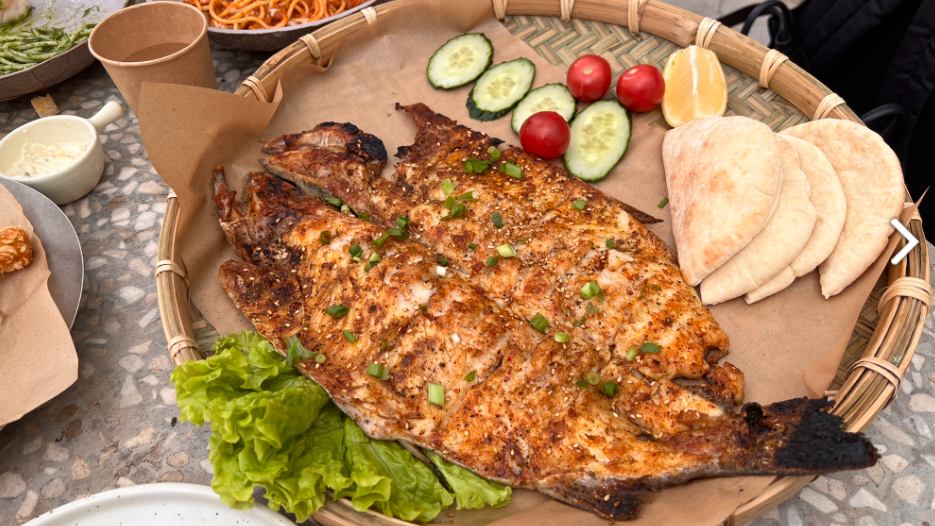
The Huairou district around Mutianyu is one of the main rainbow trout (虹鳟鱼 [hóng zūn yú]) farming areas near Beijing. These fish are raised in cold, clear mountain water, and the local restaurants have built entire menus around them. Grilled whole, steamed, made into fish ball soup, or eaten as sashimi, the trout here is freshly caught and nothing like the frozen versions served in the city. As a result, after a morning on the wall, sitting by a fish pond with a cold beer and a freshly grilled trout is one of the better things you can do in the Beijing countryside.
Yu Shifu Rainbow Trout (鱼师傅)
This restaurant on Huaihuang Road has been open for 30 years and is the most established name in the local trout scene. The kitchen keeps fish in on-site ponds and cooks them to order. The grilled trout is the signature dish: split and cooked whole, the bones come out easily, making it practical for children and older visitors. Beyond the fish, the braised pork with chestnuts, the fresh trout ball and tofu casserole, and the hand-rolled flatbread all receive consistent praise. Three people eat well for around 330 RMB. The restaurant has indoor and outdoor seating, private rooms and parking.
JollyEast’s Review: the fish is pulled from on-site ponds immediately before cooking. You can really taste how fresh it truly is. Absolutely delicious!
Address: 9 Weidian Village, Huaihuang Road | Google Maps
Jingbei Yujia’ao (京北渔家傲)
About 1 km south of Mutianyu Great Wall, this large restaurant is the other main rainbow trout destination in the area. The scale is notable: there is a sprawling multi-zone space with indoor halls, outdoor areas, a café and a coffee bar, all pet-friendly. Staff catch the fish from visible ponds during your visit. The braised pork with chestnuts is the most-recommended dish after the trout, and the fried mustard-filled rice balls and wild vegetable platter are popular starters. Booking ahead is advised at weekends. The multiple dining zones, visible ponds, and café counter are all mentioned in reviews. Reviewers consistently note that parking is free and plentiful even on busy weekends.
JollyEast’s Review: it’s pet-friendly and we saw many cute dogs here. We ordered four dishes for two people and couldn’t finish them. The portions were huge. The grilled fish was especially tasty, and overall it felt like great value for the price. The food also came out pretty quickly.
Address: 1 km south of Mutianyu Great Wall along Huaihuang Road | Google Maps
Taoyuan Farm: Firewood Fish and Chicken (桃园农庄)
Located near Shenquan Temple scenic area, this restaurant specialises in 柴火鱼 [chái huǒ yú] and 柴火鸡 [chái huǒ jī], fish and chicken cooked over a wood-burning stove. The broth for the fish is slow-cooked until milky white, and the kitchen recommends adding firm tofu and wide noodles mid-meal. The 鼎锅饭 [dǐng guō fàn] (iron cauldron rice), made over a wood fire with a cured pork topping and a golden crust at the bottom, is a second reason to visit. The setting is a courtyard farmhouse with outdoor seating and a relaxed atmosphere. Several reviewers call this the best iron-pot meal they found anywhere near the Great Wall.
JollyEast’s Review: Tried the iron pot chicken stew—fresh, flavorful, and generously portioned. The spice level is strong, so ask for less if needed. Great value overall. The wood-fired rice with cured pork and scallions was a highlight.
Address: 400 meters west of Shenquan Temple scenic area ticket office | Gaode Maps
Ruoshui Garden Iron Pot Stew (若水苑长城脚下铁锅炖)
In Bohai Town near the Sanduhe area, this restaurant lets you choose your fish from a live tank before being cooked. The 嘎鱼 [gā yú] (yellow catfish) is the recommended choice: tender, with almost no small bones. Pork belly and cornbread baked onto the side of the pot are standard additions. The courtyard backs onto a stream, and there is a small playground for children, making it a practical family lunch stop. At around 72 RMB per person, visitors consistently describe this as the best-value meal in the Bohai Town area. The catfish is praised for its clean flavour and near-boneless texture, and reviewers with children specifically mention the riverside courtyard and playground as reasons to linger after the meal.
JollyEast’s Review: Stopped here on the way to Huairou and loved it. Spacious yard with parking and a river view. The iron pot fish was fresh and flavorful, portions were generous, and service was great. Perfect after a day out.
Address: Opposite Sanduhe Lotus Terrace Village, Bohai Town | Gaode Maps
Special Restaurants Near Mutianyu
Qunsheng Courtyard: Donkey Meat (群生大院)
This long-running restaurant in Huairou town is the area’s most famous destination for donkey meat, a northern Chinese speciality that most international visitors have not tried. The 驴肉火烧 [lǘ ròu huǒ shāo] (braised donkey meat stuffed into a sesame-seed flatbread) is the main draw. The restaurant also serves rainbow trout and standard farm dishes. The interior is spacious, with a large courtyard and a small sandpit for children. This restaurant appears on Dianping’s must-eat list for the Huairou area. The charcoal-grilled donkey kebabs, served on a rack with spirits lit beneath for a brief flame, are mentioned in almost every review as the meal’s most memorable moment. Visitors who add rainbow trout to their order note that both halves of the menu complement each other well.
JollyEast’s Review: A great find near Huairou with a long-standing reputation. The donkey meat dishes stood out for their rich flavor and tenderness, especially the burgers and skewers. The grilled trout was equally fresh and tasty.
Address: 22 Xigan Road West Third Village, Huairou Town | Google Maps
Yingxu Private Kitchen (迎旭私家菜)
A three-table private dining room in Sandahe Village, Bohai Town, run by a husband-and-wife team. Advance booking is essential as there are only three tables. The menu changes with the season and has no fixed options: dishes like pan-fried tofu with egg yolk (a classic copycat crab dish using egg), five-coloured aubergine, pulled milk tofu and bamboo shoot river shrimp are representative. The interior features considered design details, quiet and intimate in atmosphere.
JollyEast’s Review: Hidden gem with a cozy courtyard. Reservation recommended. Dishes like the special ribs, jade beef, and grilled fish are exquisitely presented and full of flavor. Portions aren’t huge, but quality is excellent. Quiet, private setting with thoughtful touches; worth coming back.
Address: 21-2 Sandahe Village, Bohai Town, Huairou District | Gaode Maps
Hetang Weidao: Jiangnan-Style Dining (荷塘味道)
Near Huanghua Cheng (Water Great Wall), this restaurant occupies a Huizhou-style whitewashed courtyard beside a river, with a lotus pond and black swans on the grounds. The setting feels like southern China transported north. The charcoal-grilled rainbow trout is the signature dish, cooked to order and finished with crispy skin. The chestnut braised pork, hand-rolled green onion flatbread and handmade fish ball soup with free-range chicken are all popular choices. The restaurant handles large groups.
JollyEast’s Review: A unique riverside spot near the Water Great Wall. Enter through a path down to a courtyard with a lotus pond and swans. The grilled trout and scallion pancakes were great, ingredients fresh, portions generous. Relaxing setting and good value.
Address: 250 meters north of Huanghua Bridge, An Fourth Road, Jiuduhe Town, Huairou District | Google Maps
Is there a restaurant inside the Mutianyu Great Wall scenic area?
Yes. The main options near the entrance are Mubassi Restaurant (buffet, around 50 RMB per person), LINES Great Wall Restaurant (Western and Chinese, around 80 RMB), and a Subway and Burger King for fast food. None of these are particularly special, but all are convenient if you want to eat without leaving the park after your climb.
What is the local food speciality near Mutianyu Great Wall?
Rainbow trout (虹鳟鱼) is the defining local dish in the Huairou area around Mutianyu. The fish are raised in cold mountain water and served at a cluster of family-run restaurants within a few kilometres of the wall. The most popular preparation is whole grilled trout, but the fish is also served as a hotpot, in soup, as fish balls, or as sashimi at the better-equipped restaurants.
How much does a meal cost near Mutianyu Great Wall?
Farm restaurants near Mutianyu typically charge 60–120 RMB per person for a full meal. The rainbow trout restaurants on Huaihuang Road run around 100–110 RMB per person for a generous spread. Inside the scenic area, the Mubassi buffet is about 50 RMB per person, and LINES averages around 80 RMB. Private kitchens like Yingxu charge more but include multiple courses.
Which restaurant near Mutianyu is best for families?
Ruoshui Garden Iron Pot Stew in Bohai Town works well for families: you can pick your fish from a live tank, the portions are large, the courtyard has space for children to move around, and a small playground is on site. Jingbei Yujia’ao is also a good choice for its size, outdoor seating, and pet-friendly policy, and it has a café area for adults who want coffee after lunch.
Do I need to book a restaurant near Mutianyu in advance?
For most farm and trout restaurants, booking is optional on weekdays but strongly advised on weekends and public holidays when crowds from the wall spill into every nearby restaurant. Yingxu Private Kitchen requires advance booking regardless of the day, since it has only three tables. Call ahead or book via the restaurant’s listing on a Chinese map app if you have a fixed arrival time in mind.
Have questions about visiting? Email hello@jollyeast.com and we’ll get back to you within 24 hours.
The Great Wall Restaurant Guide: Best Eats Near Badaling
Every visit to Badaling involves kilometres of walking and involves kilometers of walking and leaves you hungry by the end. by the end. Knowing the Great Wall dining options in advance saves time and avoids bad choices. The area around Beijing’s most popular Great Wall section offers a wide range of dining choices. From fast-food chains near the entrance near the ticket gate to a to hearty iron-pot meals in nearby valley villages in the valley villages, and a few hidden eateries along the way.
Quick Summary
What it is: A guide to the best places to eat inside and around Badaling Great Wall, organised by location and type
Best in-park option: Badaling Food Plaza, about 10 minutes on foot from the main ticket gate
Best farm meal: Iron pot stew restaurants near Shuiguan Great Wall, 2–5 km from the main entrance
Standout experience: The tofu banquet at Liugou village, around 60 RMB per person
Budget tip: Bring your own water. One bottle on-site costs 10–15 RMB
Inside the Badaling Scenic Area
More dining options exist inside the gates than most first-time visitors expect. Once you pass through the main ticket checkpoint, the central restaurant zone is roughly 10 minutes away on foot.
Badaling Food Plaza (八达岭美食广场)
It’s the most practical sit-down restaurant inside the park. Walk through the main arch and follow the path west; the entrance is on your left. The interior uses raw timber panelling and textured earth-tone walls to create a roadside-garrison atmosphere, and an open kitchen lets you watch the cooks at work. Staff bring a complimentary cup of warm ginger tea to each table.
Badaling Food Plaza
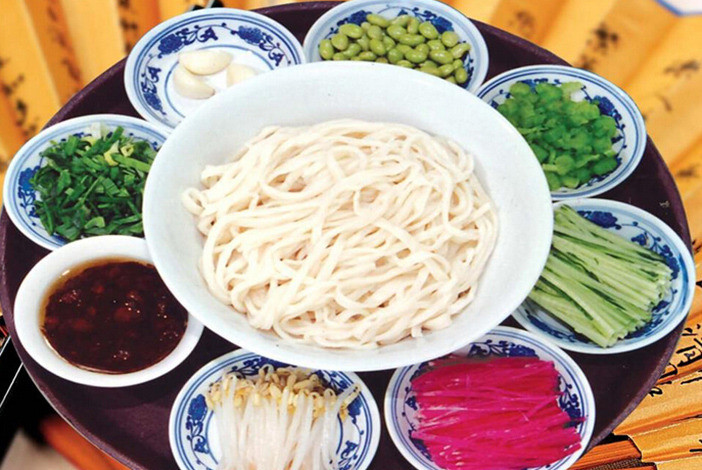
The dishes worth ordering here are the 炸酱面 [zhá jiàng miàn] (Beijing-style noodles with fermented soybean sauce and pork), the 羊蝎子火锅 [yáng xiē zi huǒ guō] (spinal lamb hotpot with a milky broth for four hours), and the red-oil wontons made with fresh river shrimp. Before you leave, try the 15 RMB ice cream shaped like a miniature arrow tower, with candied hawthorn at the centre. Families with young children appreciate the kids’ corner, which means parents can actually eat. Visitors describe the atmosphere as more welcoming than a typical park canteen, with the complimentary ginger tea and the open kitchen both mentioned consistently across reviews.
Address: Building 3, Unit 103, West Side of Badaling Great Wall scenic area. About 10 minutes’ walk from the main ticket gate.
Badaling Hotel Chinese Restaurant (八达岭饭店中餐厅)
This restaurant sits directly opposite the visitor service centre inside the scenic area and was originally built to host state delegations, which explains the grand five-hall layout seating up to 1,000 people. It is listed as a a designated restaurant by the Beijing Municipal Tourism Bureau. The ground floor features a self-service buffet at 68 RMB per person, covering more than 20 hot and cold dishes along with noodles, fruit and drinks. The second floor offers à la carte dining in a calmer setting, kung pao chicken, fish-flavored shredded pork and sour-hot potato strips. Reviewers call it reliable rather than remarkable, which is exactly what you want after a long morning on the wall.
Badaling Hotel
KFC, Starbucks and Subway are also present near the entrance for fast, familiar options. (Google Maps)
Farm Restaurants Near Badaling: Iron Pot Stew
The villages in the hills around Badaling are built around one dish: 铁锅炖 [tiě guō dùn], iron pot stew. A large cast-iron pot is fired over wood or charcoal, and the contents, whole goose, river fish, free-range chicken or lamb ribs, cook slowly until everything falls apart. Cornbread stuck to the side of the pot soaks up the sauce. These meals require a taxi or private car to reach, but they are significantly better value and flavour than anything inside the gates.
Meishigu Gagaxiang Iron Pot Stew (美食谷嘎嘎香)
Located in Sanbao Village, about 2 km from Shuiguan Great Wall, this restaurant has panoramic mountain views through its floor-to-ceiling windows and sits next to the old Jingzhang Railway corridor. The signature dishes are iron pot goose and free-range chicken, both braised to falling tenderness. The 锅包肉 [guō bāo ròu] (crispy sweet-and-sour fried pork) is particularly popular, and reviewers mention the northeast-style potato and aubergine stew as a standout side dish. Free parking and plenty of space make it an easy choice for families or groups. Visitors single out the old railway track beside the building as a bonus for children, and multiple reviews note the food is less salty than typical northeast-style cooking in the city, making it more accessible for non-Chinese palates.
Iron Pot Stew
JollyEast’s Review: If you’re craving a hearty iron pot stew, this is the place. The goose and free-range chicken were tender and flavorful, portions were generous, and everything tasted authentic. Spacious setting with mountain views, great service, and perfect for families.
Address: 6 Sanbao Village, Badaling Town (near Shuiguan Great Wall) | Baidu Maps
Liugou Old Courtyard No. 16 and the Tofu Banquet (柳沟老院16号豆腐宴)
Liugou village has been known for its tofu for generations. The local story traces the flavour back to a centuries-old well whose water makes unusually smooth bean curd. Liugou Old Courtyard No. 16 serves a set-menu tofu banquet where every course revolves around bean curd prepared in distinct ways: hand-torn, crispy-fried, shaped into lion’s head meatballs, or simmered in a fire pot until the outside turns caramelised. Cornbread, sticky millet cakes and oiled flatbread round out the table. Pricing is around 59 RMB per person and the kitchen offers unlimited refills on most dishes.
Visitors describe the experience as better value than expected. The freshly baked cornbread and meat patties draw near-universal praise, and reviewers note that the tofu in the fire-pot improves the longer it cooks.
JollyEast’s Review: Famous Liugou tofu feast lived up to the hype. The tofu was fresh with great variety, and the fried pancakes were a standout. Simple farmhouse flavors, very filling, and great value. Try this if you are a vegetarian or don’t want to eat meat!
Address: 55–56 Liugou Village Block 1, Liuer Road, Yanqing District | Baidu Maps
Yuanfu Country Iron Pot Stew (缘福乡村铁锅炖)
Close to Badaling and popular with larger groups, this restaurant has northeast Chinese décor, live fish tanks on the second floor (you watch your fish being selected), and a glass walkway over a stream with cherry trees. The iron pot goose is the main event, paired with freshwater fish and lamb ribs as alternatives. Cornbread sides are standard. A rooftop courtyard works well for photos before or after the meal.
This restaurant has been running for over ten years and visitors say the quality has held consistently. The iron pot goose and the cornbread dipped in the braised broth are the details most visitors mention.
JollyEast’s Review: Great spot near Badaling for a classic iron pot stew. The goose, ribs, and fresh fish were flavorful, with generous portions. Loved the corn pancakes soaked in broth. Nice countryside setting, good service. Perfect after visiting the Great Wall.
Address: East 100m from Ancient Great Wall West Road and West Can Road junction, Yanqing District | Gaode Maps
Restaurants with a View or a Story
If you want something beyond farm stews, the Badaling area holds a handful of more distinctive options worth knowing about.
Ahan Thai Restaurant (阿含泰餐厅)
Tucked into Shifosi Village just a short drive from Commune by the Great Wall, Ahan Thai is one of those places that surprises you. Step through the door and the surroundings shift — golden decorations, tropical plants and a warmly lit interior make it feel like you’ve wandered into a different country. The contrast with the rugged mountain landscape outside is part of the appeal.
The menu is built around classic Thai cooking. The tom yum goong (hot and sour prawn soup) is a good opening move — a sharp, aromatic broth with firm, springy prawns and a well-balanced heat. The beef curry is rich and deeply spiced, with tender beef fully coated in a thick, fragrant sauce. The lemongrass grilled chicken is another standout: golden skin, juicy meat, and the herbal fragrance of fresh lemongrass running through every bite. Round the meal out with stir-fried morning glory or green papaya salad if you want something lighter.
JollyEast’s Review: Highly recommend the Thai crab curry and the tom yum. Vegetables were fresh and the dining space was lovely.
Address: 49 Shifosi Village, Badaling Town (near Commune by the Great Wall) | Baidu Maps
Suhe Restaurant (苏禾·SUHE餐厅)
Just 1.7 kilometres from the Badaling shuttle stop, Suhe Restaurant is an unexpectedly refined dining room in an area better known for iron pot stews. The building itself is worth a pause: white walls, aged timber, swaying reeds and a small courtyard garden create a calm, modern-rustic atmosphere that reads equally well for a quiet date or a family gathering. The interior seating covers round two- and three-person tables on the ground floor as well as larger four-to-six-person tables, and two private dining rooms on the second floor accommodate groups of up to twelve, for which the restaurant can also arrange a table setting.
The dish most regulars come back for is the owner’s braised pork belly — the kitchen’s signature and the perfect post-wall recovery meal. Slow-cooked until the fat renders into silky and the meat pulls apart easily, it is rich without tipping into greasiness. The new seasonal offering, Old Chongqing fish-fragrant pork strips, brings a Sichuan-meets-home-cooking quality that has quickly built following. Also recommended: smashed aubergine (擂茄子), winter pea shoots in clear broth, and the Datong warming hotpot. Average spend is around 100 RMB per person.
JollyEast’s Review: White industrial-style exterior, a peaceful courtyard, and a refined interior. The braised pork belly was genuinely not greasy — exactly as advertised. The chilli chicken portion was huge.
Address: 114 Xibaozi Village, Badaling Town | Baidu Maps
Right Vine Courtyard Restaurant (右茑庭院餐厅)
A restored courtyard house in Shifosi Village, remodelled with a rooftop 360-degree terrace that looks directly at the Great Wall. The kitchen serves Sichuan-style food: chilli chicken, fish-fragrant pork shreds and wild bamboo shoot with cured pork are the recommended dishes. The contrast between the calm courtyard setting and the bold flavours of Sichuan cooking is a surprise worth seeking out.
右茑庭院餐厅
Visitors who expect standard tourist food are surprised by the quality of the Sichuan cooking. The bamboo shoots with cured pork and the fish-fragrant pork shreds receive consistent praise. The courtyard stays noticeably calmer than the wall section nearby even during peak hours.
JollyEast’s Review: Unexpectedly great Sichuan food. The spicy chicken and shredded pork were flavorful but not overly heavy. Fresh ingredients, generous portions, and a cozy terrace with mountain views made it a relaxing spot to unwind.
Address: 25 Shifosi Village, Badaling Town | Baidu Maps
Guishan Manor at Shixia Ancient Fort (妫水人家)
Inside the Shixia Ancient Fort guesthouse in Shixia Village, this is the only kitchen in the area where you can try 石烹 [shí pēng] (stone-cooking), a local intangible cultural heritage technique. The centrepiece dish is the 酱猪脸 [jiàng zhū liǎn] (soy-braised pig’s face), a Yanqing non-heritage speciality simmered in an old master stock. When the dish arrives, it is carried to the table on a ceremonial palanquin to the sound of a gong. Stone-cooked scrambled eggs and stone-braised fish head.
Soy-braised pig’s face
JollyEast’s Review: Great spot after a hike for hearty local dishes. The braised pork face was huge, tender, and full of flavor—served with a fun presentation. Loved the crispy pork knuckle and fish head stew too. Cozy, traditional setting and definitely worth a visit.
Address: Shixia Village, Badaling Town, Yanqing District | Baidu Maps
Practical Tips for Your Great Wall Restaurant Visit at Badaling
The great wall restaurant scene around Badaling divides into two tiers: in-park options for convenience, and village options for value and flavour. Time your meal around the wall crowds. Peak congestion on the walkways runs from 9 am to 11 am, and the in-park restaurants fill up. Eating before 9 am or after 1 pm makes a noticeable difference. You need a taxi or private car. Most are 2–20 km from the main gate, with no direct bus connection from the entrance.
The 长城礼遇 [Chángchéng lǐyù] combo ticket (approximately 300 RMB per person) includes a 20% discount at participating restaurants inside the scenic area and is worth considering for a full-day visit.
Is there a restaurant inside the Badaling Great Wall scenic area?
Yes. Badaling Food Plaza is the main sit-down option, roughly 10 minutes on foot from the main ticket gate. It serves Beijing noodles, lamb hotpot and dim sum. The Badaling Hotel Chinese Restaurant, opposite the visitor service centre, runs a buffet at 68 RMB per person. KFC, Starbucks and Subway are also available near the entrance for quick bites.
How much does food cost at Badaling Great Wall?
Inside the scenic area, a sit-down meal costs 60–150 RMB per person. The hotel buffet is 68 RMB. Farm restaurants outside the park, such as the iron pot stew spots near Shuiguan, typically run 70–120 RMB per person. Water on the wall is expensive at 10–15 RMB per bottle, so bring your own from the base.
What is the best restaurant near Badaling Great Wall for families with children?
Meishigu Gagaxiang Iron Pot Stew near Shuiguan Great Wall works well for families. The space is generous, parking is free, there is a small railway track nearby, and the food is flavourful without being spicy. Badaling Food Plaza inside the park is also family-friendly, with a kids’ play corner and warm, attentive service.
Can I find vegetarian food near Badaling Great Wall?
Vegetarian options are available but not abundant. Badaling Food Plaza has stir-fried vegetable dishes and shrimp dumplings. The Liugou village tofu banquet is largely plant-based, since bean curd is the main ingredient across every course. Farm restaurants will usually prepare a vegetable dish on request, though their menus are built around meat-centred stews.
Is it better to eat inside the Badaling scenic area or at the farm restaurants outside?
Outside is better if your schedule allows. Farm restaurants in the surrounding villages offer more flavour, larger portions and lower prices than the in-park options. The iron pot stew places near Shuiguan Great Wall and the tofu banquet at Liugou village are both worth a detour. You will need a taxi or car to get there, so factor in about 20–30 minutes of travel each way.
Have questions about visiting? Email hello@jollyeast.com and we’ll get back to you within 24 hours.
Preferences
Language and currency
Choose the display language and pricing currency for this visit.
Language
Currency
Account
Delete account request
Submit a manual account deletion request for JollyEast support to review. This does not automatically delete your account or order history.
Account deletion requests require sign-in and JollyEast Core v1.5.0 or later.